
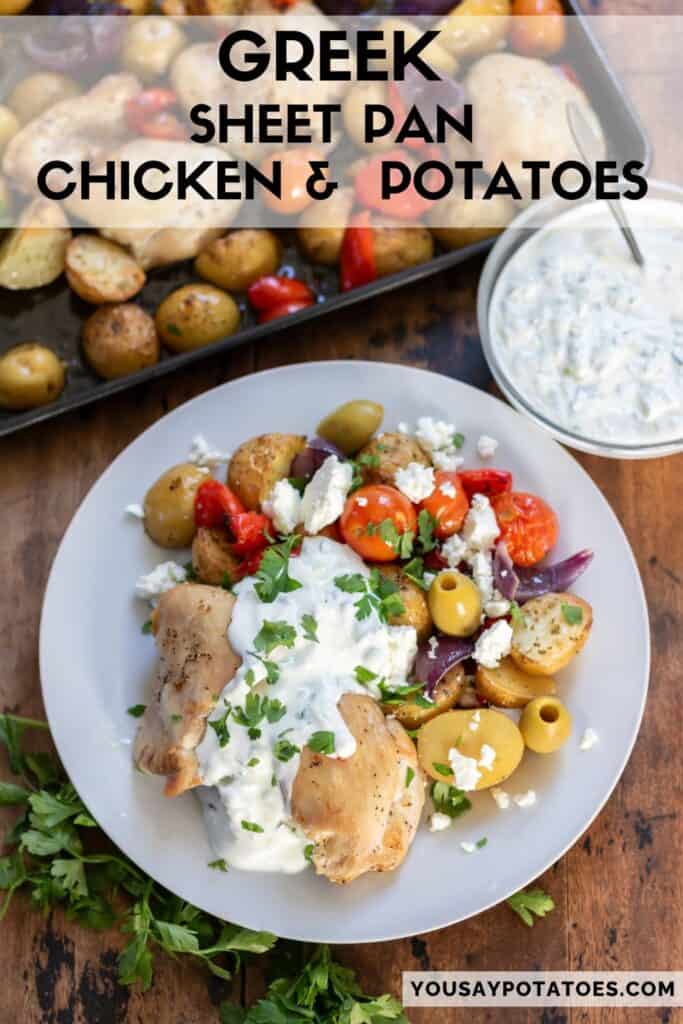
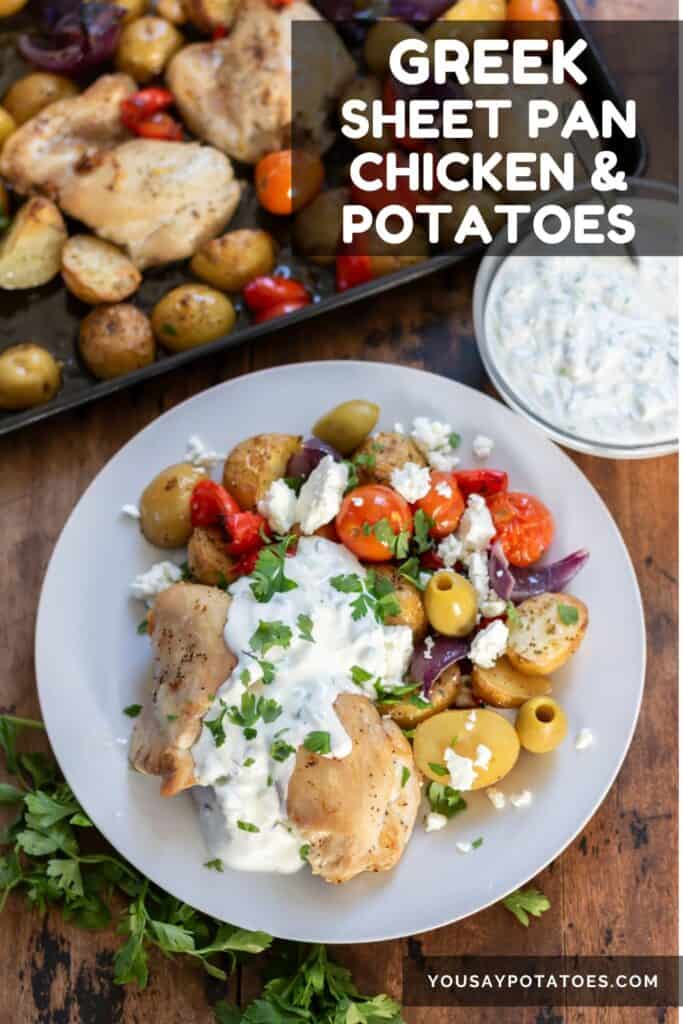
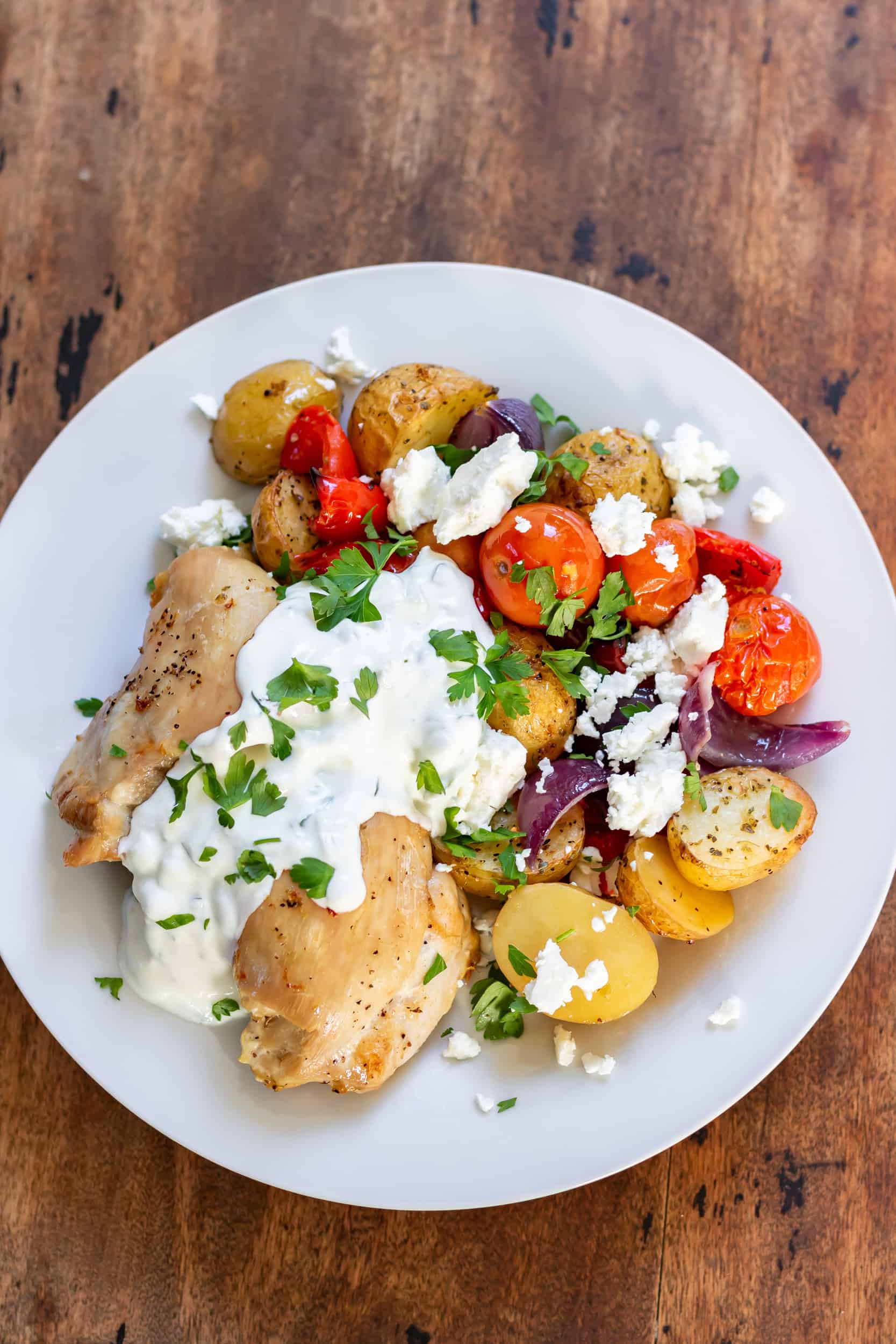
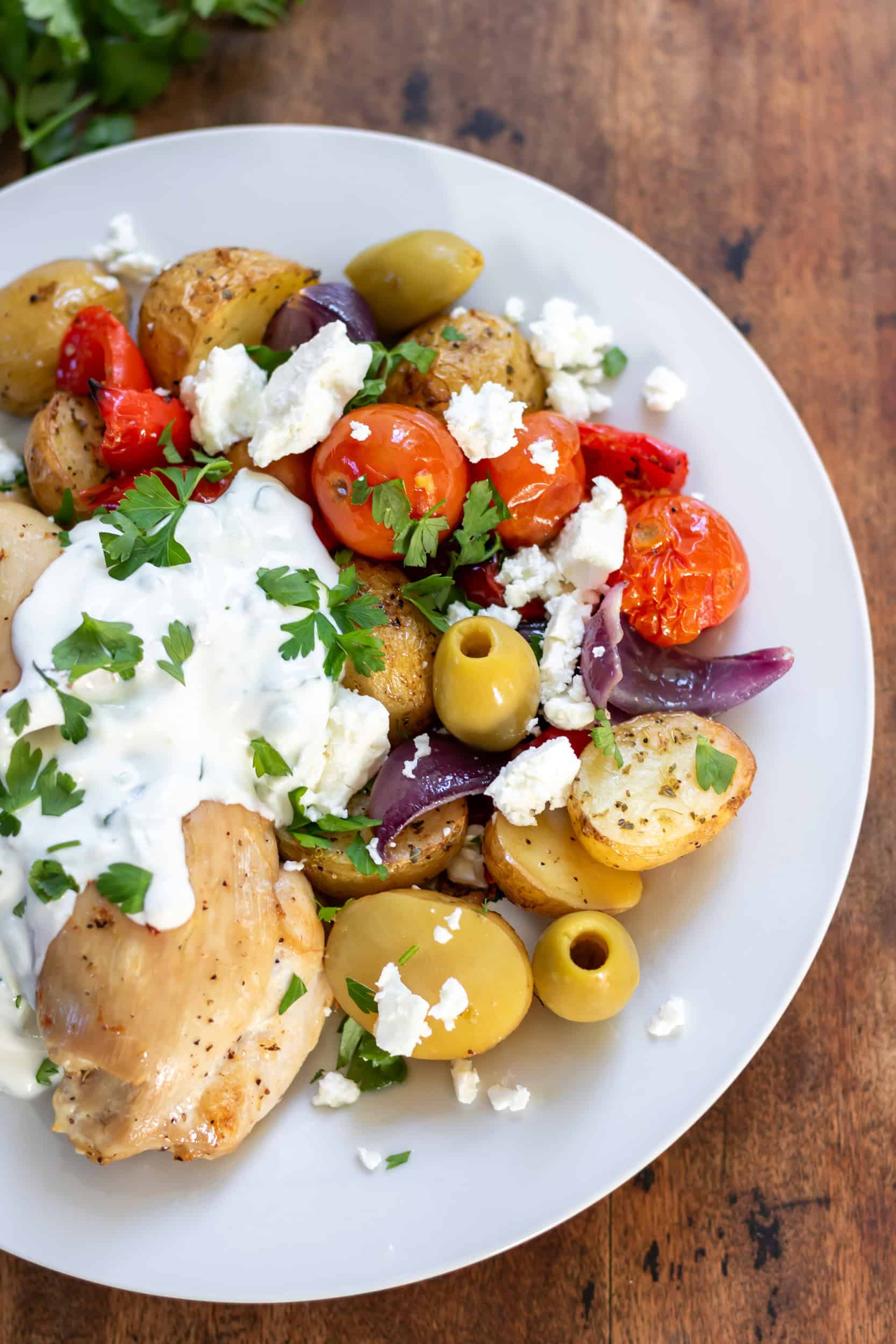
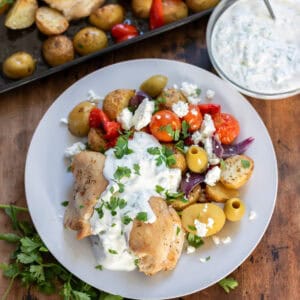
Make this easy Greek Lemon Chicken and Potatoes sheet pan dinner in under 45 minutes, with juicy thighs, golden potatoes, zingy lemon, tomatoes, feta, olives and a drizzle of tzatziki sauce.
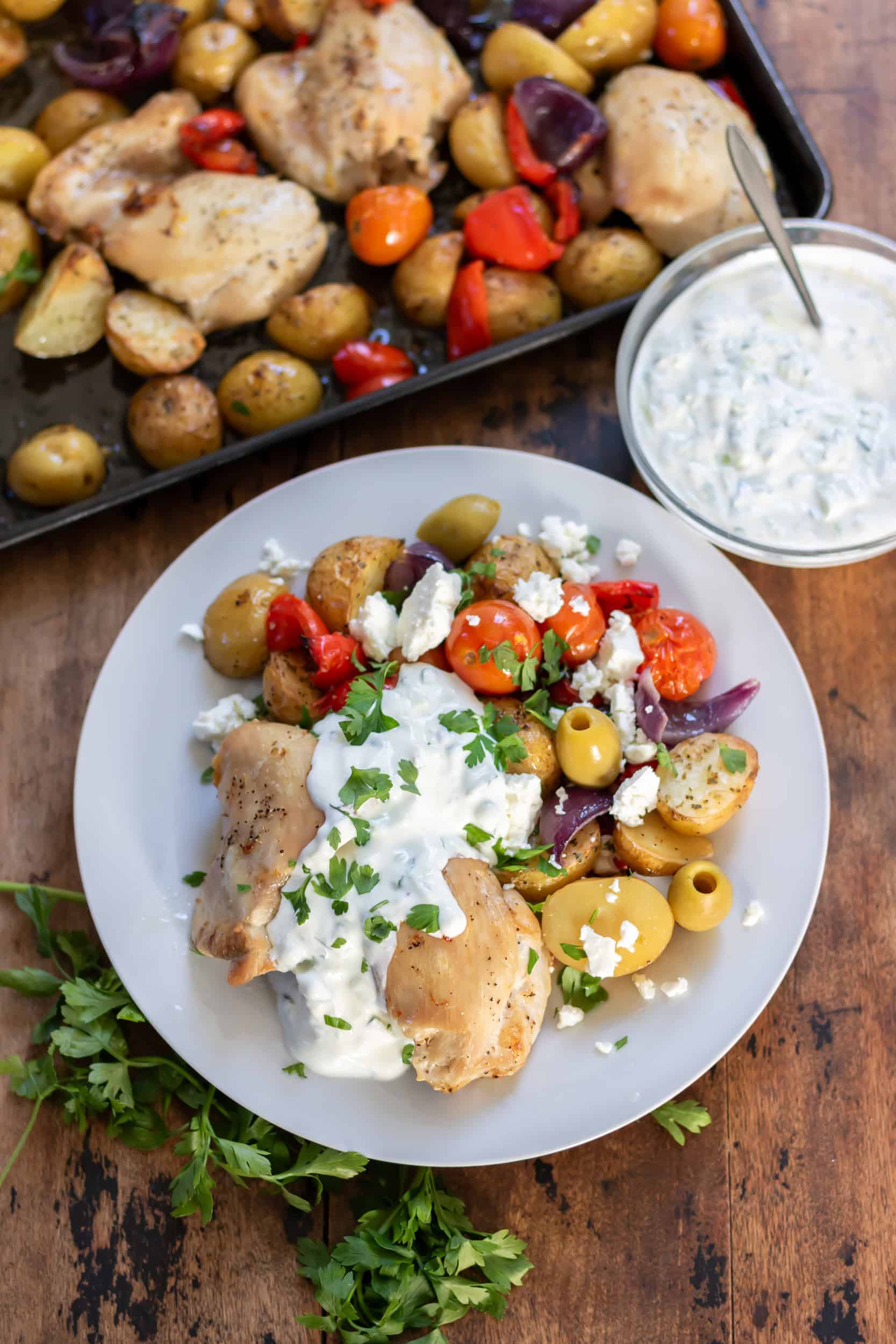
I love how easy sheet pan dinners can be. We make this Baked Chicken Breasts and Potatoes allll the time. But sometimes I want to add a new twist to it, and this Greek Lemon Chicken and Potatoes sheet pan dinner packs a lot of flavour with minimal effort.
The base is simple: boneless chicken thighs, baby potatoes and vegetables roasted with olive oil and oregano.
What makes it particularly good is the contrast at the end. You have crisp, browned potato edges and savoury chicken alongside sweet roasted tomatoes, salty feta and olives, fresh parsley and enough lemon to brighten the whole pan.
Chicken thighs are especially useful here because they're forgiving. They remain juicy during the fairly robust roasting needed to brown the potatoes and vegetables.
The potatoes need 15 minutes on their own before the chicken joins them. I wouldn't skip that head start.
Baby potatoes may look small, but if they're added with everything else, the chicken can be ready while the centres of the potatoes are still firmer than I'd like.
I also hold back the tomatoes, garlic and lemon until later. Garlic can become harsh when exposed to high heat for too long, while cherry tomatoes only need enough time to soften, blister and release some of their juice.
This is a useful dinner when I'm feeding four people but don't want several side dishes to organise. Tzatziki is lovely with it, although the pan already has enough going on that I don't consider it essential and it's just a tasty optional extra.
Allow about 45 minutes, and use the largest sheet pan you have. Space is almost as important as timing here. Two uncrowded pans produce a better dinner than one overcrowded one.
Vegetables release steam as they roast. Give that moisture somewhere to escape and the potatoes colour beautifully.
Pack everything tightly together and you'll still have dinner, but it will be softer and wetter. I now divide the ingredients between two pans without hesitation when my tray looks crowded.
Jump to:
Potatoes
I use small waxy or all-purpose baby potatoes because they keep their shape while developing crisp, golden surfaces.
Cut them in half rather than leaving them whole. The cut face provides a broad surface that can make direct contact with the hot pan.
Try to buy potatoes of reasonably similar size. If there's a large one hiding in the bag, quarter it. You're aiming for pieces that cook at approximately the same rate.
Giving them that initial 15-minute roast is important. Toss them thoroughly in oil and spread them out rather than piling them together. I usually put at least some cut-side down because those surfaces develop particularly good colour.
Larger potatoes are also fine, but cut them into roughly 3 cm chunks. Floury potatoes can become more crumbly around the edges, which isn't necessarily a bad thing, but they'll behave differently from firm baby potatoes.
The most common mistake is overcrowding. Pale potatoes usually need more space, not more oil!
Why You'll Love This Recipe
- Most of dinner cooks together. The chicken, potatoes and vegetables share the same roasting pans, which keeps both preparation and washing up manageable.
- Chicken thighs stay juicy. They're much more forgiving than breast meat when you're waiting for vegetables to finish roasting.
- The vegetables have different textures. Potatoes become golden, onions soften at their edges, peppers turn sweet and tomatoes remain juicy because they're added later.
- Lemon balances the richer ingredients. Fresh juice cuts through the olive oil, chicken thighs, feta and olives, keeping the finished pan lively rather than heavy.
- It's easy to adapt. Zucchini, broccoli, sweet potatoes, different olives and several herbs can be swapped in without changing the basic method.
- It makes a complete meal. You don't really need another side, although bread, salad or tzatziki all fit naturally alongside it.
- Leftovers are useful. The chicken and vegetables work well in wraps, salads or reheated the following day.
Ingredients
You only need simple pantry ingredients for this recipe!
- Chicken thighs - Boneless skinless chicken thighs stay succulent while the potatoes finish cooking. Choose pieces of reasonably similar size so they're ready together. Very large thighs may need a little longer. Check out these other Chicken Thigh Recipes.
- Baby Potatoes - These form the substantial base of the meal. Look for small, firm potatoes without soft spots. Halving exposes enough surface area for browning while leaving the centres creamy. You can also cut regular potatoes into small chunks.
- Red pepper - Red pepper becomes sweeter as it roasts. Yellow or orange peppers work equally well. Keep the pieces fairly chunky so they don't become too soft.
- Red Onion - Wedges hold their shape better than thin slices. Leave a little of the root attached when cutting if you want the wedges to remain together.
- Tomatoes - These provide sweetness, acidity and juices that mingle with the lemon and olive oil. Small plum tomatoes are another good option. If your tomatoes are particularly large, halve them.
- Feta - Feta provides salty, creamy contrast to the roasted ingredients. I prefer buying it in a block and crumbling it myself because the pieces have a nicer texture.
- Olives - Kalamata olives give the dish a particularly Greek character, although green or mixed olives are equally good. Always check supposedly pitted olives before serving. An occasional stone can slip through.
- Olive oil - Olive oil encourages browning and carries the oregano, garlic and lemon around the pan. I use a decent everyday extra virgin olive oil rather than saving my most expensive bottle for roasting.
- Oregano - Dried oregano holds up particularly well to oven heat. Rub it briefly between your fingers as you add it to release its aroma. Fresh oregano can be used, but I'd add some towards the end as well.
- Garlic - Garlic goes in later so it has enough time to mellow without spending 45 minutes exposed to high oven heat.
- Lemons - You'll use zest and juice. Choose unwaxed lemons when possible if you're zesting the skin. I always keep the second lemon for finishing because fresh juice tastes quite different from juice that's been roasted.
- Parsley - Parsley gives the finished pan freshness and colour. Flat-leaf parsley is my usual choice, but either type works.
- Salt and black pepper - Season in stages rather than relying on a large amount at the finish. Remember that feta and olives both contribute salt later.
- Tzatziki, optional - Cool, creamy tzatziki works especially well against hot roasted potatoes and lemony chicken. Serve it alongside rather than spooning it over the entire tray if you're expecting leftovers. Buy it or try making your own homemade tzatziki - it's super easy!
See the recipe card for quantities and method.
How to make Greek Lemon Chicken and Potatoes
Follow these step-by-step instructions, then scroll down for the full ingredients list and method.
Heat the oven to 200°C/400°F. Give it time to come fully to temperature. Starting the potatoes in a properly hot oven helps them roast immediately instead of slowly warming and softening.
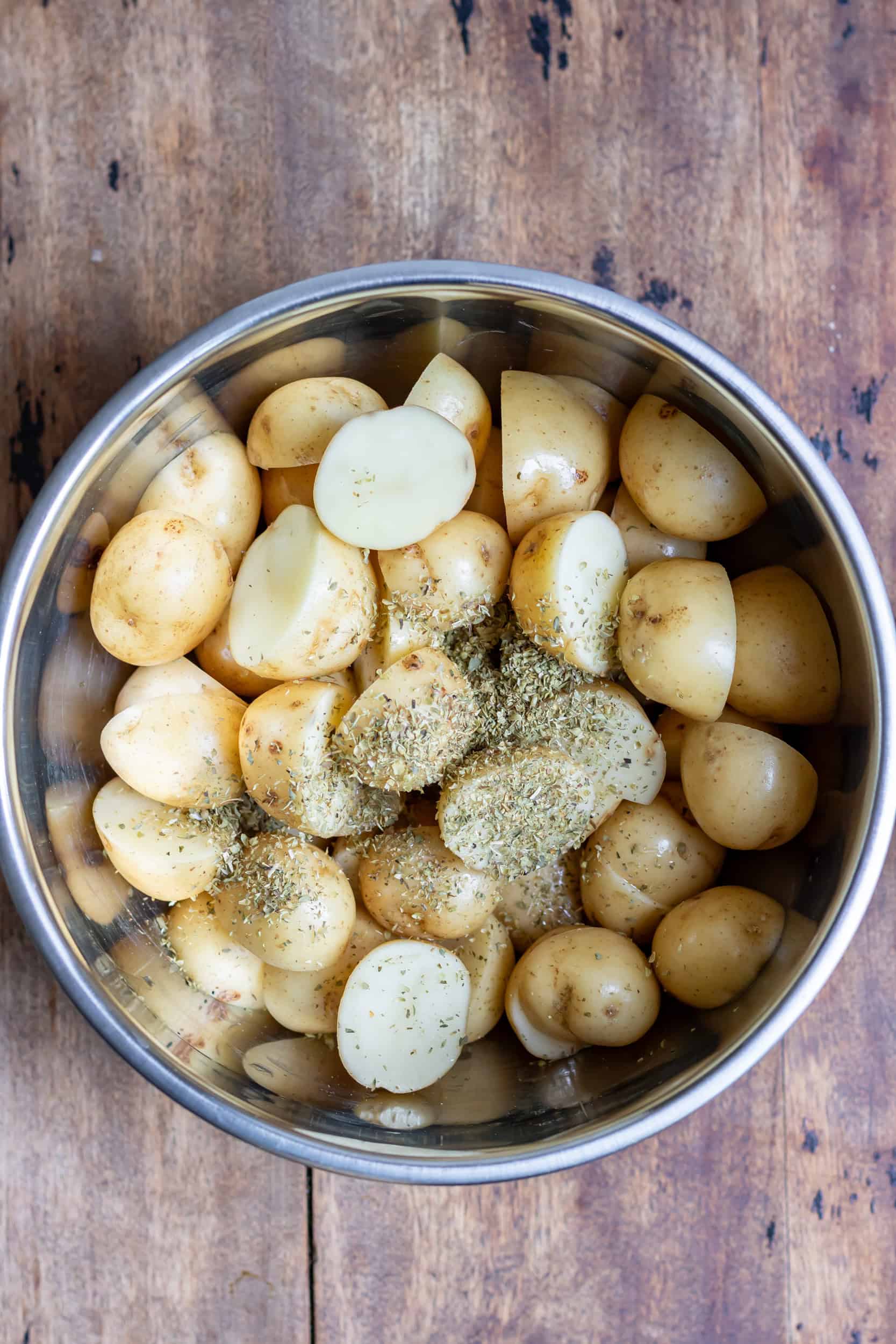
Start the potatoes. Toss the halved potatoes with 2 tablespoons olive oil, oregano, salt and black pepper.
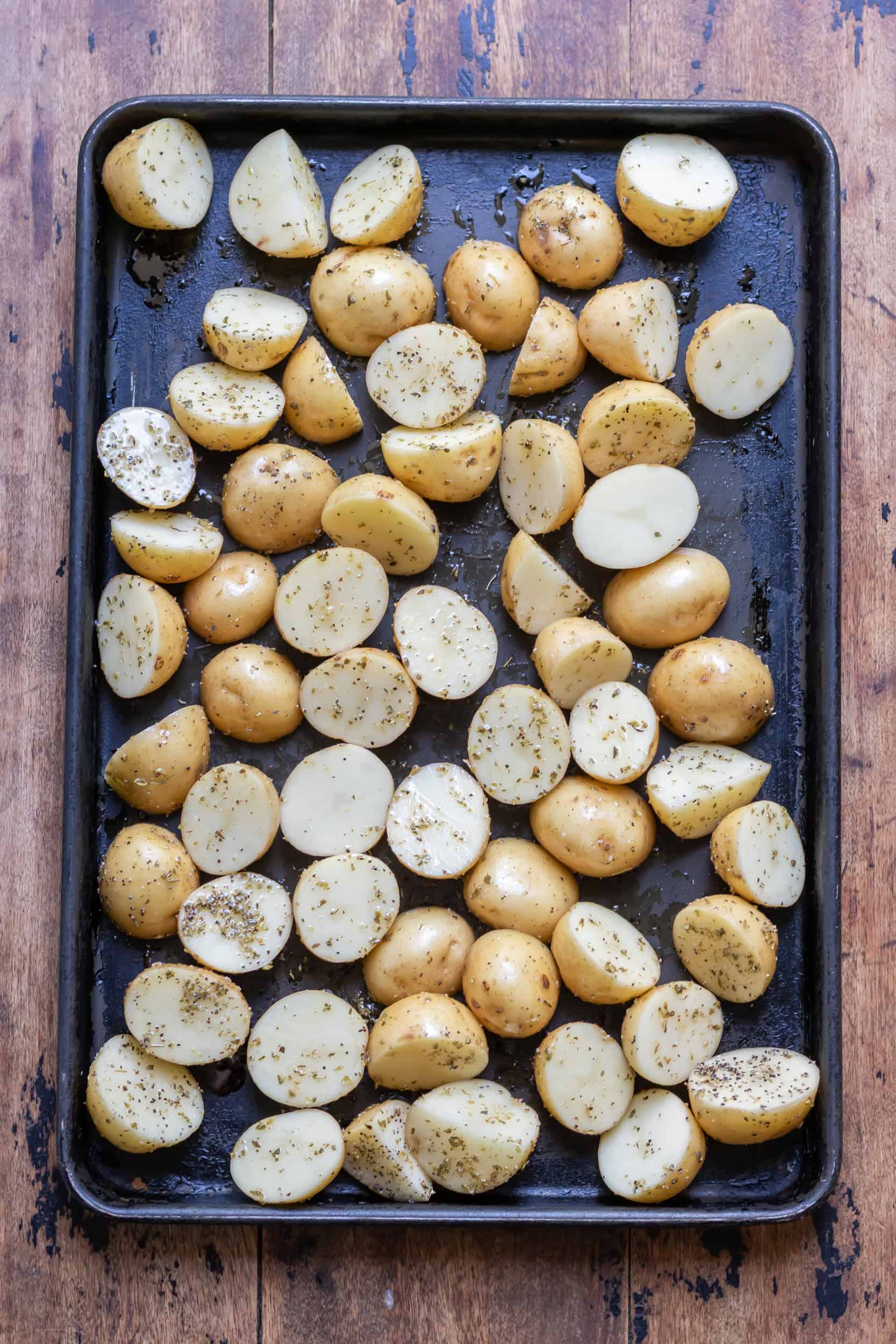
Spread them over a large sheet pan with some of the cut sides facing down. Roast for 15 minutes. They won't be cooked through yet, but the undersides should be beginning to colour.
Add the chicken and vegetables. Take the pan out and add the chicken thighs, red pepper and onion wedges. Season the chicken with salt and pepper and rearrange everything so the ingredients have breathing room. If the tray now looks crowded, divide it between two pans. Roast for 20 minutes.
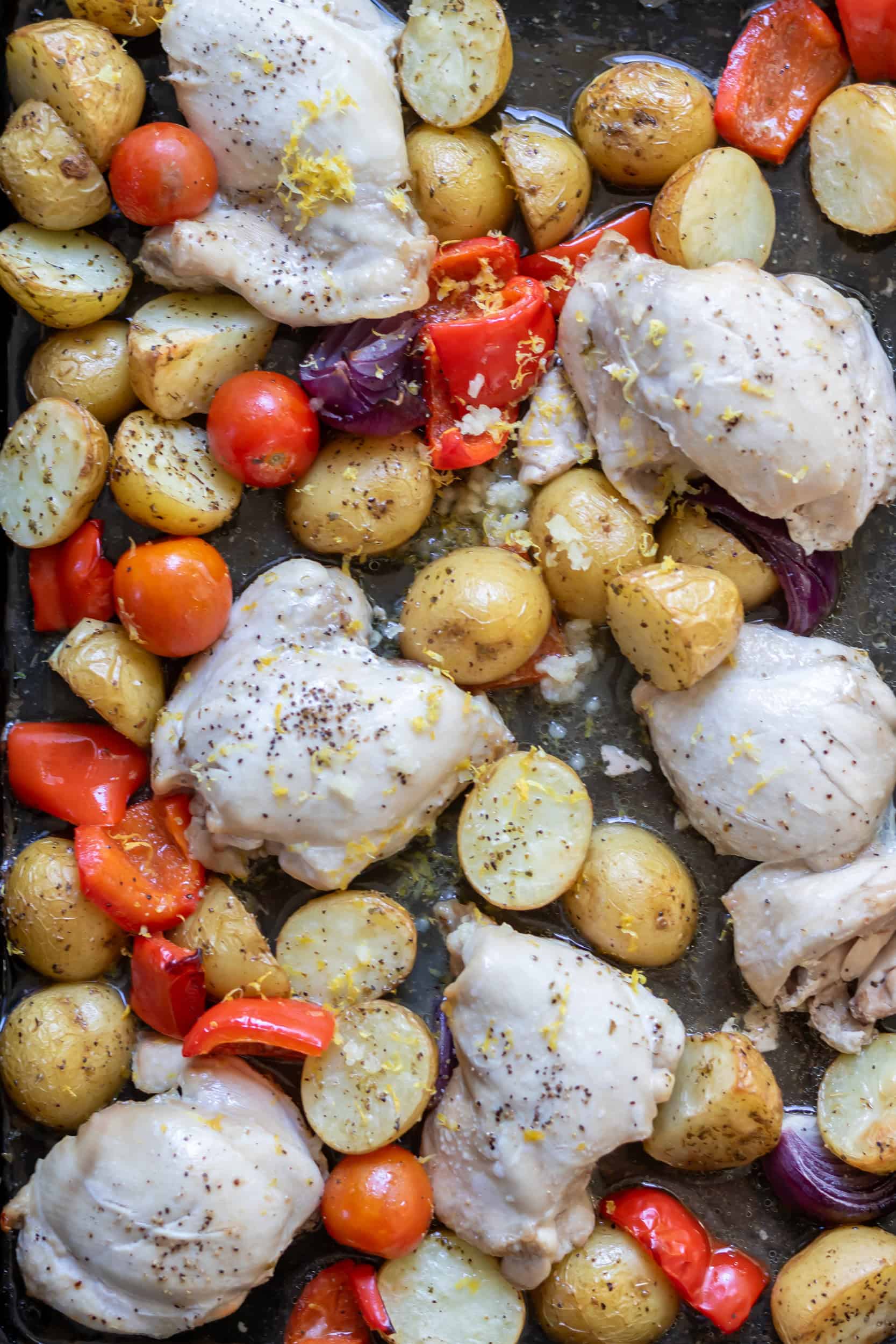
Add the tomatoes and lemon mixture. Scatter in the cherry tomatoes. Combine the remaining tablespoon of olive oil with the crushed garlic, zest of 1 lemon and juice of half a lemon, then spoon it around the chicken and vegetables. I prefer adding this mixture now rather than at the beginning because the garlic stays sweeter and the lemon tastes fresher.
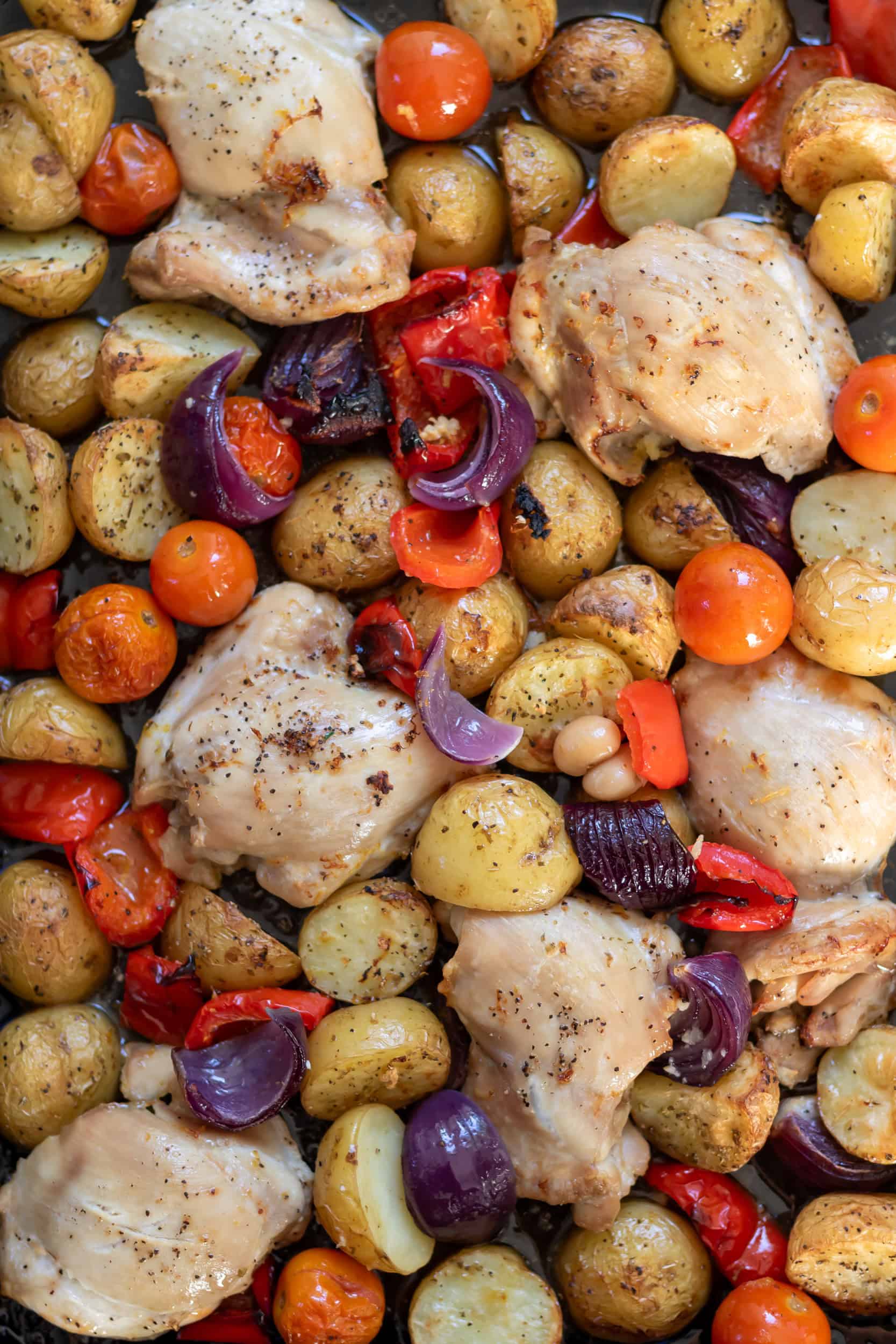
Finish roasting. Return the pan to the oven for another 10 to 15 minutes. The potatoes should be tender when pierced and browned around their edges. The tomatoes should be softened and beginning to collapse. Most importantly, the chicken must be cooked safely through. For boneless chicken thighs, check the thickest part with a thermometer and ensure it has reached at least 74°C/165°F.
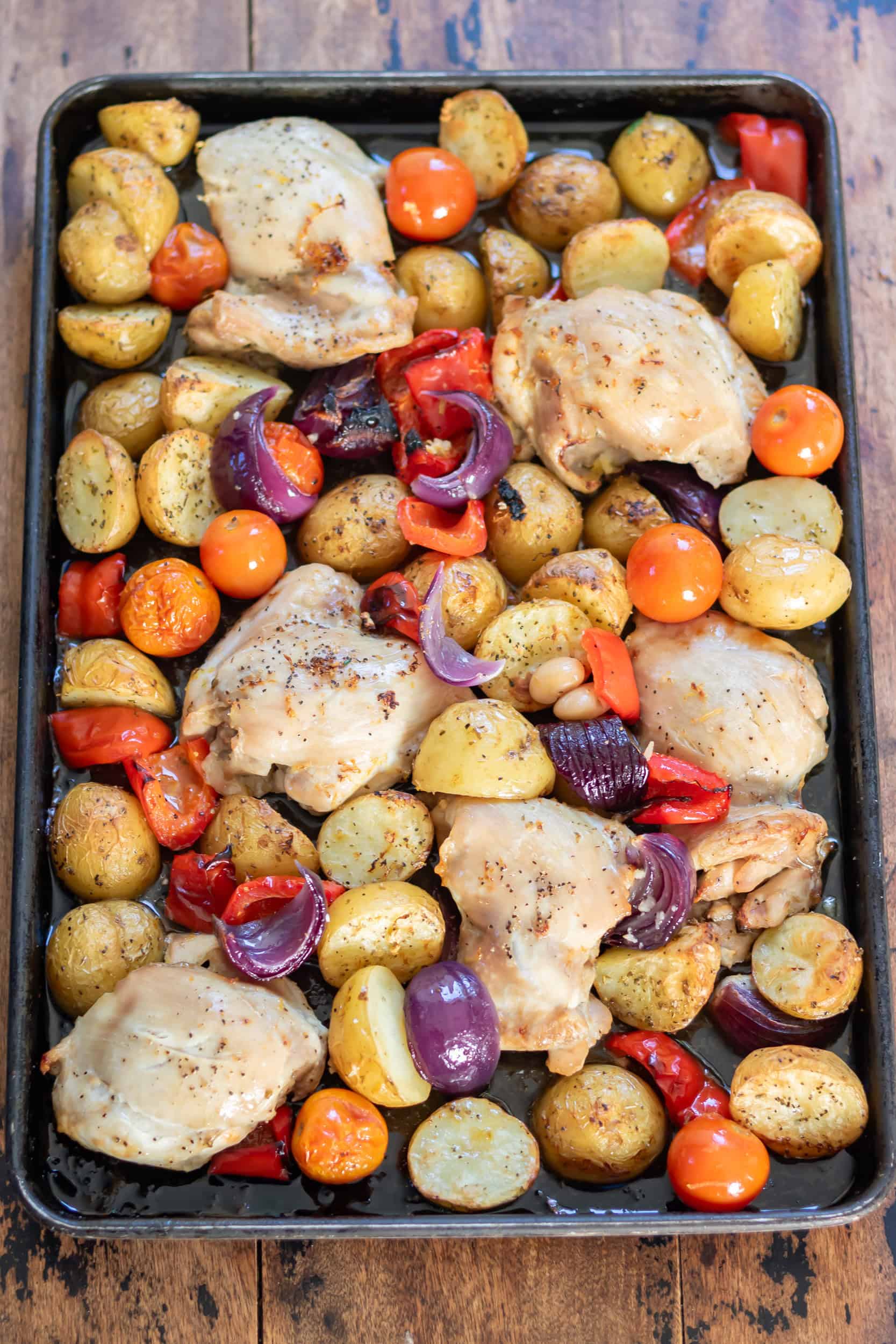
Brown the chicken further if you like. If everything is cooked but the chicken looks paler than you'd prefer, put the pan briefly under the broiler or grill. Watch it closely. With lemony pan juices and vegetables already cooked, a couple of minutes can make quite a difference.
Finish after roasting. Crumble over the feta, add the olives and parsley, then squeeze over fresh lemon juice to taste. I start with less lemon and add more at the table. Feta and olives can both be salty, so taste before adding any final salt.
Serve while hot. Spoon some of the tomato-lemon juices from the bottom of the tray over each portion. Add tzatziki at the table if using.
Scroll down for the full ingredients list and method.
Serving Suggestions
This really can stand alone, but I often add something cool, crunchy or useful for soaking up the lemony juices.
- Tzatziki provides a cool contrast to the roasted chicken and potatoes.
- Greek-style salad adds cucumber and fresh tomatoes, which are refreshing beside the hot vegetables. Or try it with Greek Pasta Salad.
- Warm pita bread is useful for catching the tomato, chicken and lemon juices left on the plate.
- Simple cucumber salad keeps a summer dinner light without introducing lots of competing flavours.
- Lemony couscous stretches the meal for a larger group and absorbs the pan juices well.
- If you're making a Greek feast, add some Greek Salad, Spanakopita and Slow Cooker Beef Stifado.
- For drinks, sparkling water with lemon or mint is an easy match. A crisp, dry white wine can also suit the lemon, feta and herbs.
Storage, Freezing & Make Ahead
Cool leftovers promptly and refrigerate them in an airtight container. They'll keep well for up to 3 to 4 days when properly refrigerated.
For meal prep, I prefer containers with enough room that the potatoes aren't completely buried beneath the wetter tomatoes. Store tzatziki separately and, when practical, keep a little fresh parsley and lemon for serving.
The potatoes inevitably soften after refrigeration. That's normal. Reheating the chicken and potatoes on a sheet pan or in an air fryer restores more of their roasted texture than a microwave does.
Add another squeeze of lemon after reheating. Leftovers often need that small hit of acidity because cold storage dulls some of the fresh finish.
You can freeze the cooked chicken for up to about 3 months, but I wouldn't choose to freeze the whole assembled tray unless avoiding waste is the priority. Cooked potatoes and tomatoes both change texture after freezing and thawing, and feta can become more crumbly.
For advance preparation, halve the potatoes and cut the peppers and onions earlier in the day. Keep the potatoes submerged in cold water in the refrigerator, then drain and dry them thoroughly before roasting. The drier they are, the better they'll brown.
More Sheet Pan Dinner Recipes

Recipe Tips
- Use two pans when necessary. Crowding traps moisture around the ingredients, which works against the golden potatoes and roasted edges we're looking for.
- Don't skip the potato head start. Fifteen minutes gives the potatoes a useful advantage over the faster-cooking chicken and vegetables.
- Keep the onion wedges substantial. Thin onion slices can become dark and dry before the potatoes finish.
- Add garlic late. Crushed garlic exposed for the entire cooking time can catch on the pan and develop a bitter edge.
- Finish with fresh lemon. Roasted lemon juice contributes depth, but fresh juice at the end provides the brighter acidity that makes the feta and olives taste balanced.
- Check the chicken rather than relying solely on the clock. Thighs vary considerably in thickness. A thermometer removes the guesswork.
- Taste before adding more salt. I've occasionally seasoned the roasted vegetables generously and then remembered that both feta and olives were still to come. Season moderately at first.
- Broil only after checking the potatoes. Browning the chicken won't help potatoes that are still firm in the centre. Make sure everything is cooked first.
Be sure to subscribe to my free Newsletter and follow me on Facebook and Pinterest for more tasty recipes!
📖 Recipe
Greek Lemon Chicken and Potatoes Sheet Pan Dinner
Equipment
- Bowl
- Sheet Pan
Ingredients
- 1 ½ lbs baby potatoes halved
- 3 tablespoons olive oil divided
- 2 teaspoons dried oregano
- Salt and black pepper
- 8 boneless skinless chicken thighs
- 1 red pepper chopped
- 1 small red onion cut into wedges
- 2 cups cherry tomatoes
- 4 garlic cloves crushed
- 2 lemons
- ¾ cup feta crumbled
- ½ cup pitted olives green, black or kalamata
- large handful parsley chopped
To serve (optional)
- Tzatziki
Instructions
- Heat the oven to 400°F/200°C.
- Toss the halved potatoes with 2 tablespoon of the olive oil, oregano, salt and pepper, spread out on a baking sheet and roast for 15 minutes.
- Add the chicken, peppers and onions, season and roast for 20 minutes. You may need to divide it between two sheet pans.
- Add the tomatoes, the remaining oil, garlic, zest of 1 lemon and juice of half a lemon and roast for another 10-15 minutes, or until the chicken is cooked through and the potatoes are golden.
- If desired, place the sheet pan under the broiler to brown the chicken thighs further.
- Crumble over the feta and parsley and finish with the olives and plenty of fresh lemon juice. Delicious topped with tzatziki sauce.
Notes
- Use two pans when necessary. Crowding traps moisture around the ingredients, which works against the golden potatoes and roasted edges we're looking for.
- Don't skip the potato head start. Fifteen minutes gives the potatoes a useful advantage over the faster-cooking chicken and vegetables.
- Keep the onion wedges substantial. Thin onion slices can become dark and dry before the potatoes finish.
- Add garlic late. Crushed garlic exposed for the entire cooking time can catch on the pan and develop a bitter edge.
- Finish with fresh lemon. Roasted lemon juice contributes depth, but fresh juice at the end provides the brighter acidity that makes the feta and olives taste balanced.
- Check the chicken rather than relying solely on the clock. Thighs vary considerably in thickness. A thermometer removes the guesswork.
- Taste before adding more salt. I've occasionally seasoned the roasted vegetables generously and then remembered that both feta and olives were still to come. Season moderately at first.
- Broil only after checking the potatoes. Browning the chicken won't help potatoes that are still firm in the centre. Make sure everything is cooked first.
Nutrition
The nutritional information provided is approximate and can vary depending on several factors, so is not guaranteed to be accurate. Please see a registered dietician for special diet advice.
Comments
No Comments