
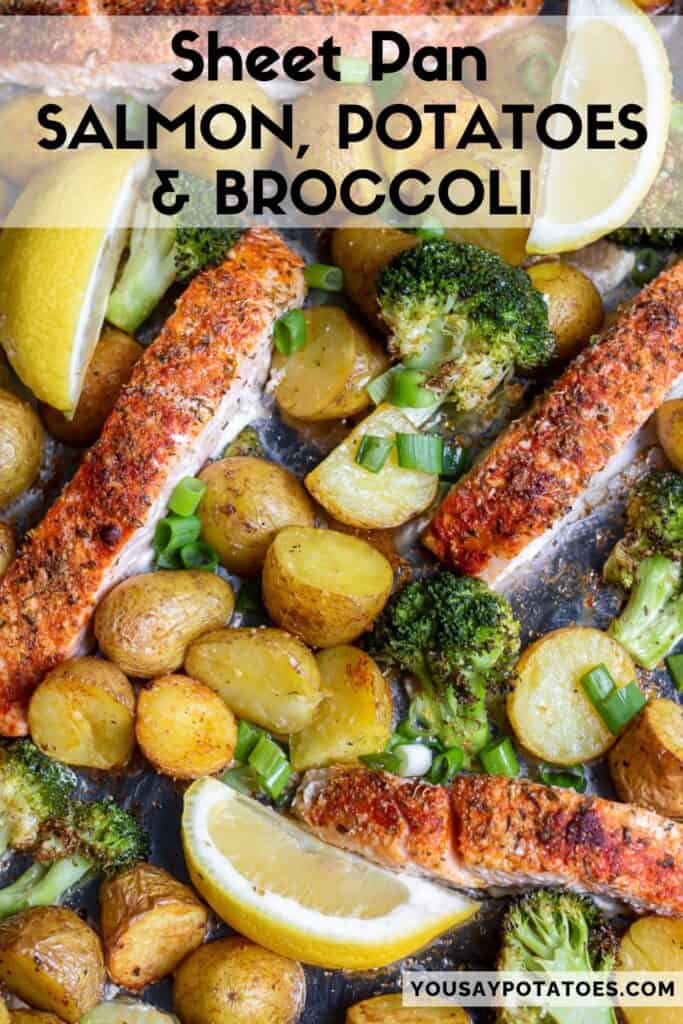
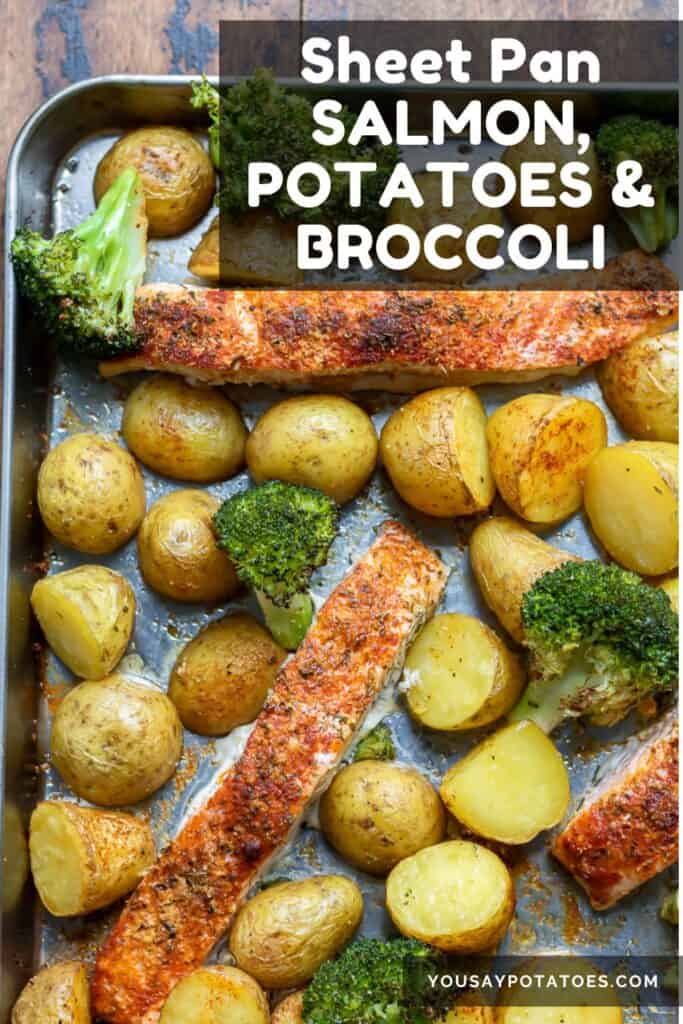
This easy Sheet Pan Salmon, Potatoes and Broccoli bake is a healthy weeknight dinner served with a simple creamy, bold horseradish yogurt sauce.
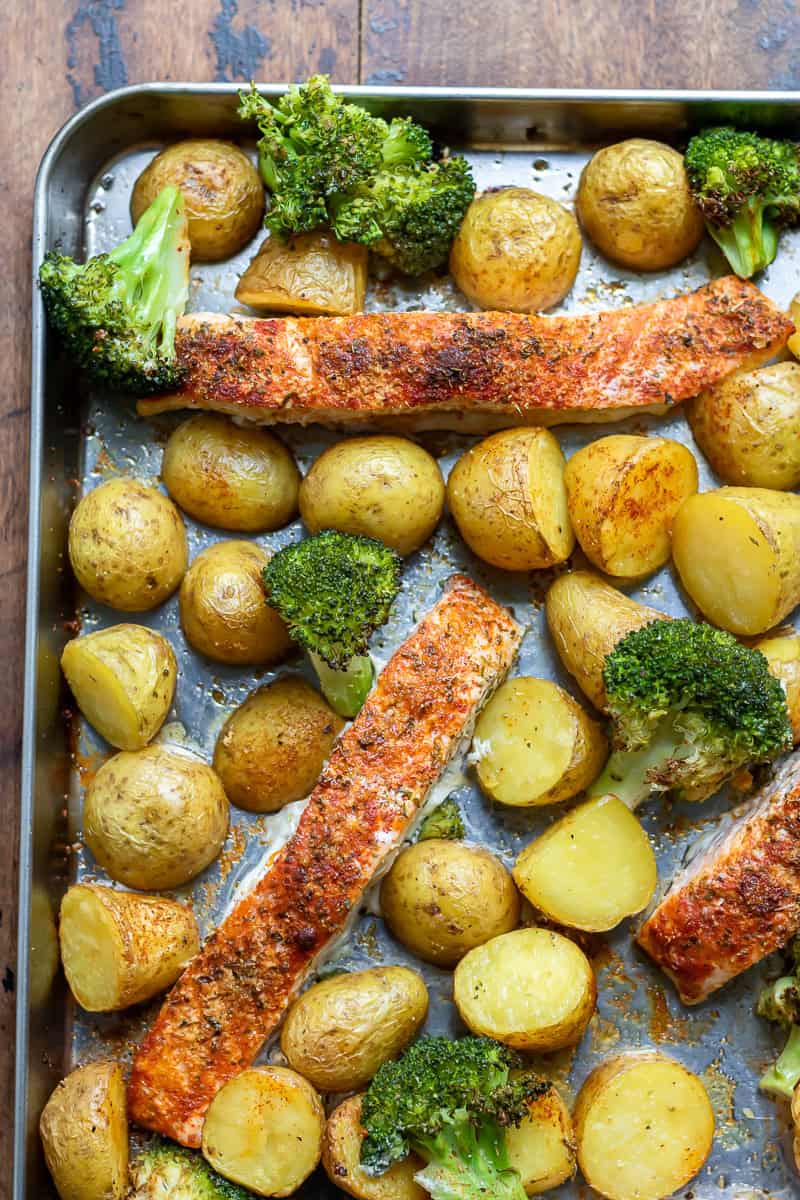
This sheet pan baked salmon, potatoes and broccoli is a super simple, flavourful midweek dinner that's ready in just half an hour!
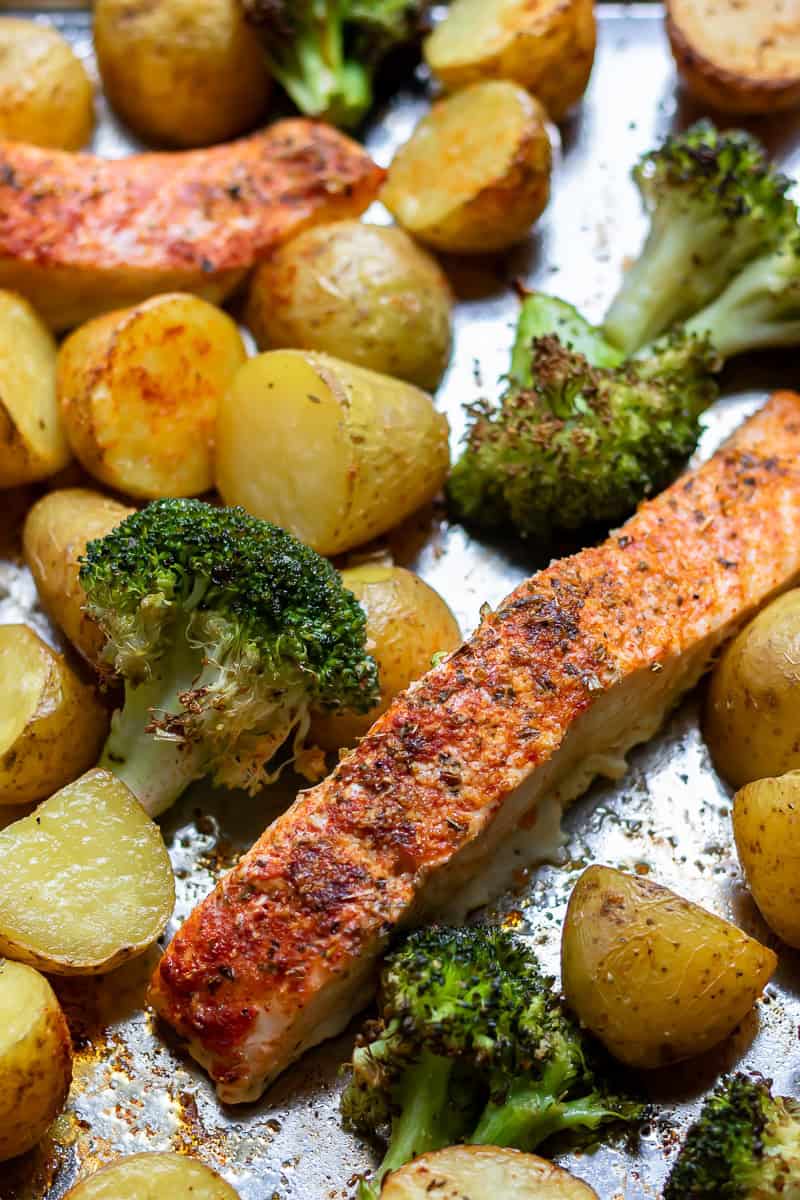
You get crisp-edged baby potatoes, tender roasted broccoli and flaky salmon, all seasoned simply with garlic, smoked paprika and thyme.
The timing is what makes this recipe work. I give the potatoes a 15-minute head start because salmon cooks much faster than potatoes do (and you don't need to parboil them!).
Once the broccoli and fish join the sheet pan, everything finishes at roughly the same time. Just give the ingredients enough room to roast rather than steam. I'd much rather use two baking trays than squeeze everything onto one if it's small. You want all the crispy edges that you can get!
I like to serve it with a good squeeze of lemon and the cool yoghurt horseradish sauce (literally just horseradish stirred into Greek yogurt - so easy and so flavorful).
This meal feels complete without needing anything complicated alongside. It works particularly well for weeknight dinners, meal prep and those evenings when I want a balanced meal with very little hands-on cooking.
Love sheet pan dinners (like we do!)? Be sure to also try Easy Potato Sausage Tray Bake (Sheet Pan Dinner), Greek Lemon Chicken and Potatoes Sheet Pan Dinner, or Baked Thai Salmon and Vegetables.
Jump to:
Why You'll Love This Recipe
- The timings actually suit the ingredients. Starting the potatoes first means you don't have to overcook the salmon while waiting for them to soften.
- Most of the cooking is hands-off. Once everything is on the tray, the oven does the work.
- There's very little washing-up. One mixing bowl, one or two baking trays and a small bowl for the sauce are essentially all you need.
- The sauce takes about a minute. Greek yoghurt already provides the creamy base, so there's no cooking or blending involved.
- It's easy to adjust for different tastes. Horseradish can be kept mild or made considerably sharper without changing the rest of the meal.
- The vegetables are flexible. Broccoli works particularly well, but cauliflower, asparagus and green beans can all be adapted to the same basic method.
- Leftovers are genuinely useful. Cold salmon and roasted potatoes make an excellent starting point for salads and lunch bowls.
Salmon
Salmon is quite forgiving in the oven, provided it isn't left there too long.
I look for fillets of a similar thickness because they'll finish cooking at approximately the same time. Very thin tail pieces can be done several minutes before thick centre-cut fillets.
Skin-on salmon works particularly well here. Place it skin-side down and leave it that way throughout cooking. The skin provides a little protection from the direct heat of the tray, although it won't necessarily become very crisp because of the vegetables and their moisture.
The biggest mistake is waiting for the salmon to become completely firm. I start checking at the lower end of the cooking time. The flesh should separate into flakes when gently pressed at its thickest point, but it should still look moist.
Trout fillets make an easy substitute and cook in much the same way. Thinner fillets simply need checking earlier.
Ingredients
You only need simple pantry ingredients for this recipe!
- Baby Potatoes - Small waxy potatoes hold their shape well while developing golden cut surfaces. I halve the smallest and cut larger ones into thirds so they're reasonably uniform. There's no need to peel them.
- Salmon Fillets - Choose similarly sized fillets if possible. Skin-on or skinless both work, although I prefer skin-on fillets for oven roasting because the skin helps protect the underside.
- Broccoli - Cut the head into medium florets. Tiny pieces tend to become dark before the salmon is ready, while enormous florets stay too firm at the stalk.
- Olive Oil - This helps the potatoes brown and prevents the salmon and broccoli from drying on the surface. An everyday olive oil is fine; there's no need to use your best extra virgin oil for roasting.
- Garlic Powder - I prefer garlic powder to fresh garlic here because fresh chopped garlic can scorch at this oven temperature. The powder also coats the potatoes and salmon more evenly.
- Smoked Paprika - Adds a gentle smoky note and gives the salmon an appetising colour. Sweet paprika can replace it if you don't want the smoky flavour.
- Dried Thyme - Thyme handles oven heat well and works with both salmon and potatoes. Dried oregano is a reasonable alternative if that's what you have.
- Salt - Season the potatoes before roasting and adjust the finished dish at the table if needed.
- Plain Greek Yoghurt - Thick Greek yoghurt makes a sauce that stays creamy on the plate rather than running into the vegetables. Full-fat and lower-fat versions both work.
- Horseradish - Prepared horseradish is easiest. Brands vary considerably in strength, so I always start cautiously, taste, and then add more.
- Lemon - Fresh lemon juice cuts through the richness of the salmon and wakes up the yoghurt sauce. I serve wedges at the table rather than squeezing everything in advance.
See the recipe card for quantities and method.
How to make Sheet Pan Salmon, Potatoes and Broccoli
Follow these step-by-step instructions, then scroll down for the full ingredients list and method.
1. Heat the oven
Preheat the oven to 220°C/425°F.
A properly hot oven matters here. You want the potatoes to start roasting as soon as the tray goes in rather than slowly warming and releasing moisture.
2. Prepare the potatoes
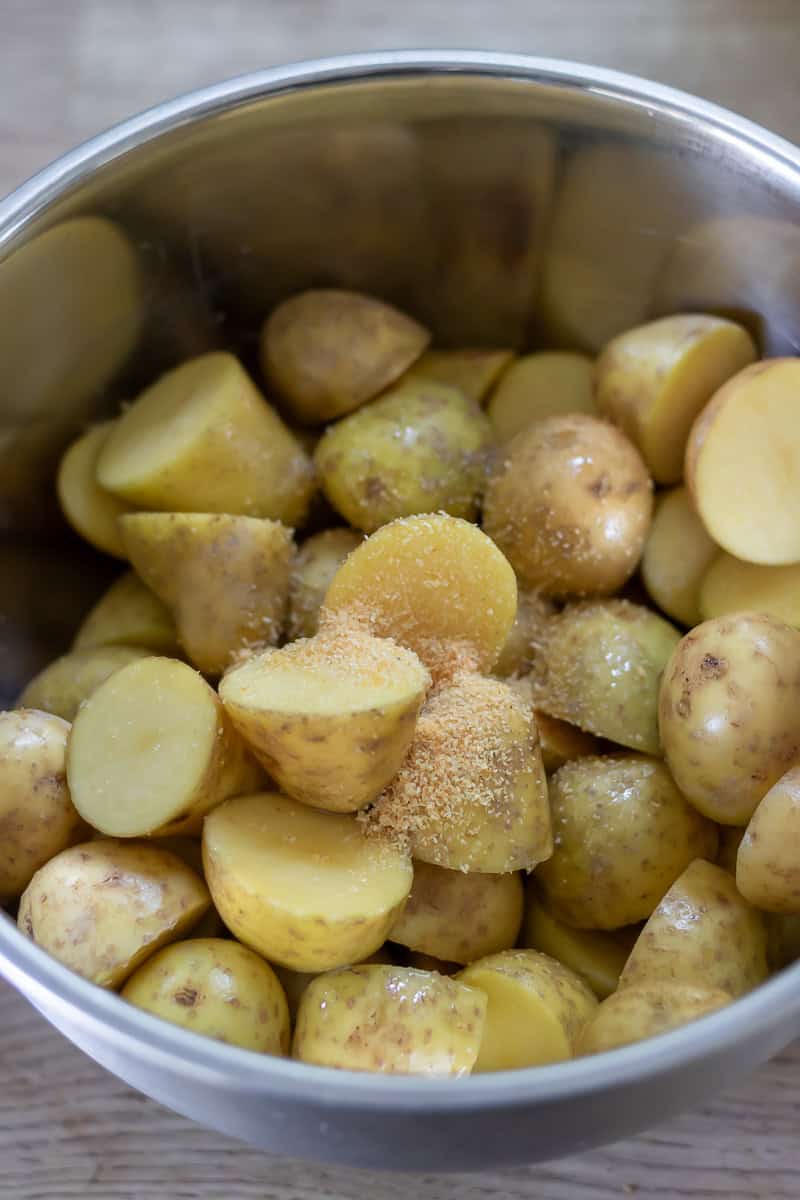
Cut the baby potatoes into halves or thirds, aiming for pieces of roughly equal size.
Toss them with two-thirds of the olive oil and half of the garlic powder until their surfaces are lightly coated.
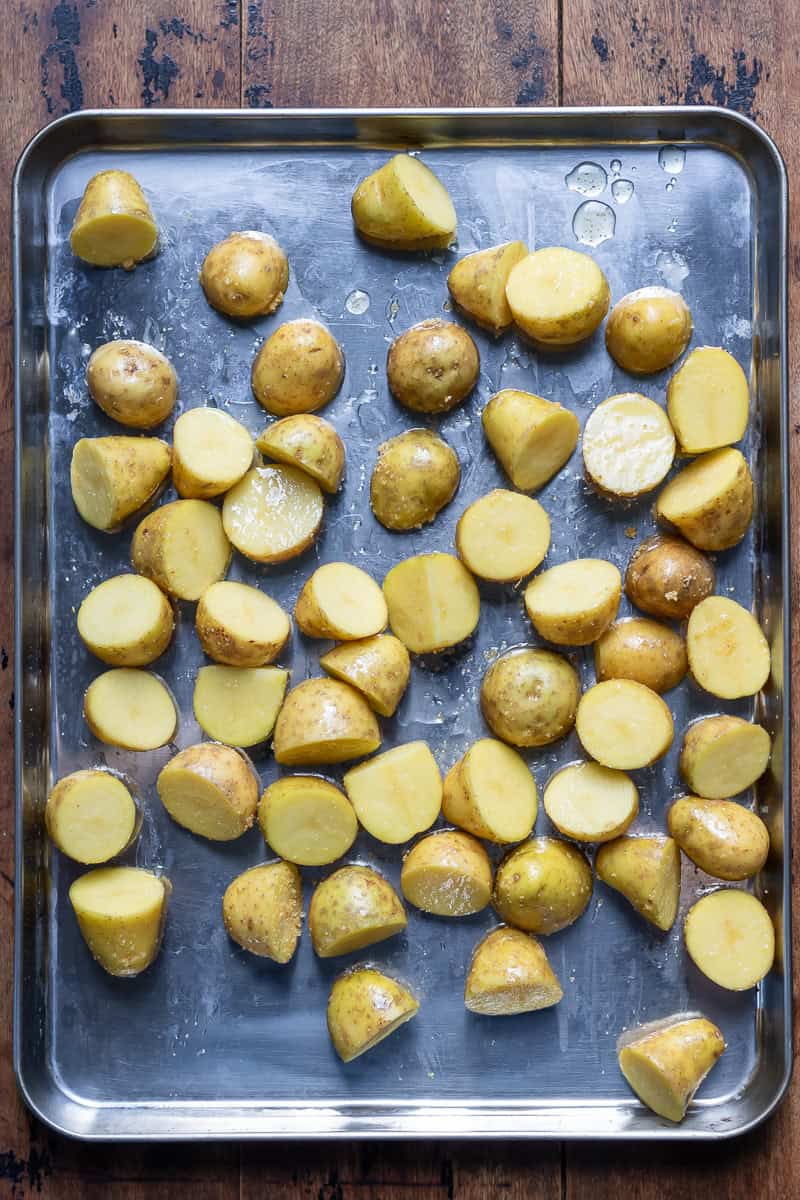
Spread them over a large baking tray with some space between them. I put as many cut sides against the metal as possible because that's where the best browning develops.
3. Give the potatoes their head start
Roast for 15 minutes.
They won't be cooked through yet. At this stage, I'm looking for slightly softened edges and the first signs of colour underneath.
Give them a stir so a different surface gets exposed to the hot tray.
4. Add the broccoli and salmon
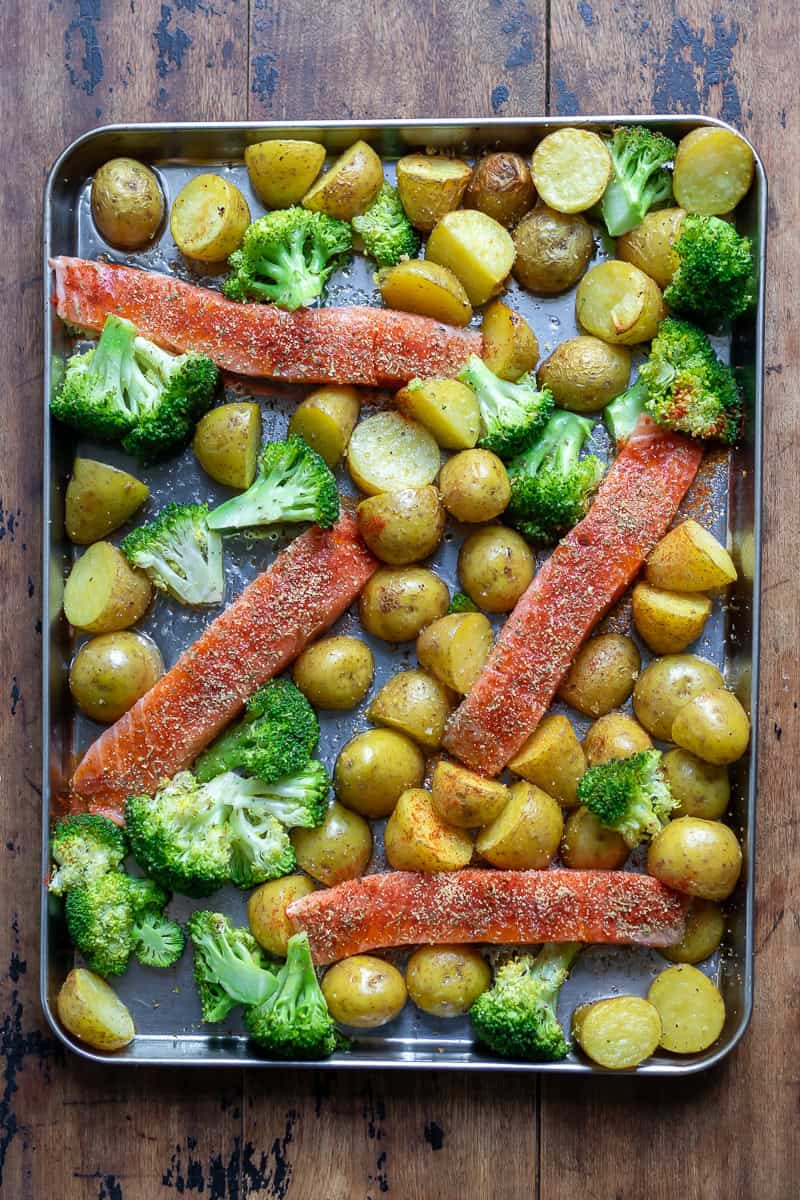
Arrange the broccoli between the potatoes and add the salmon fillets. Place skin-on salmon skin-side down.
If the tray suddenly looks crowded, split everything between two baking sheets. Don't worry about abandoning the idea of a literal one-pan dinner. Space around the ingredients makes a noticeable difference so they roast and not steam.
5. Season everything
Sprinkle the remaining garlic powder over the salmon, followed by the smoked paprika and dried thyme.
Drizzle the remaining olive oil over the salmon and broccoli. I give the broccoli a quick turn with tongs if the oil has landed mainly on one side.
6. Finish roasting
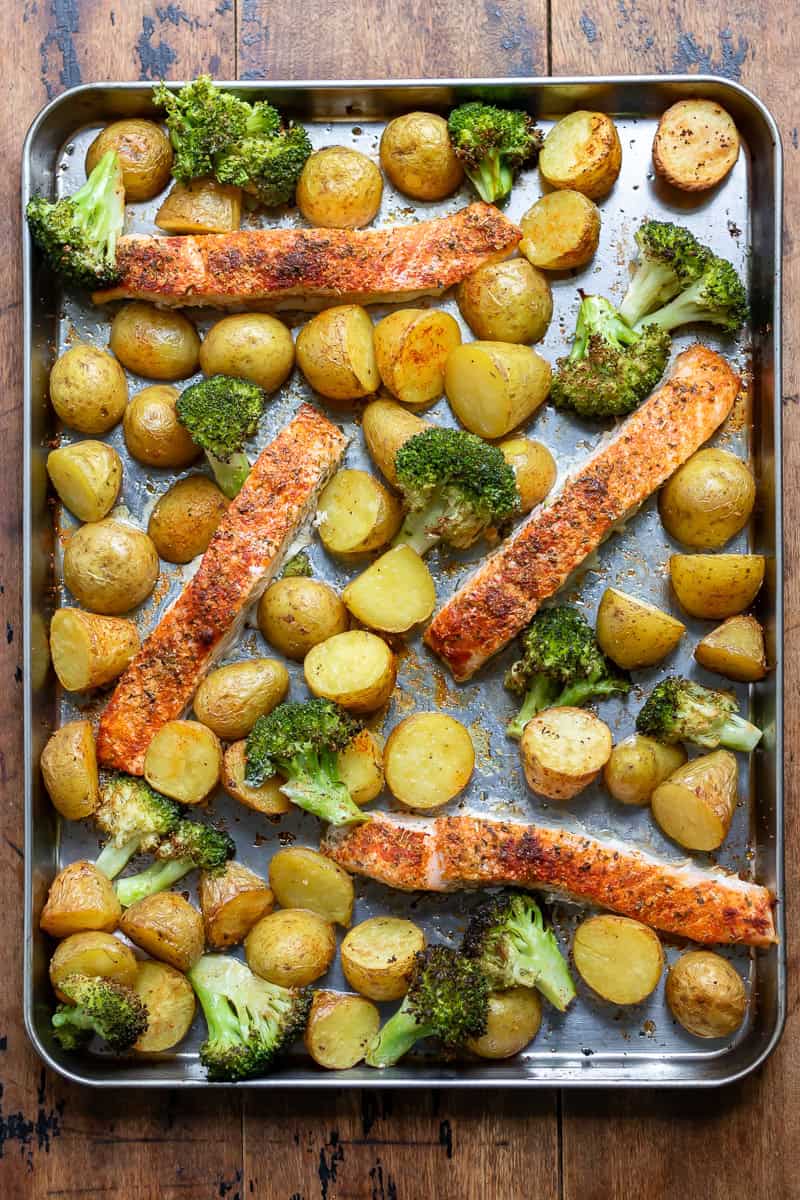
Return the tray to the oven for 10 to 15 minutes.
Start checking thinner salmon fillets at 10 minutes. The exact time depends much more on thickness than weight.
The broccoli should be tender with browned tips, the potatoes should yield easily when pierced, and the salmon should separate into moist flakes.
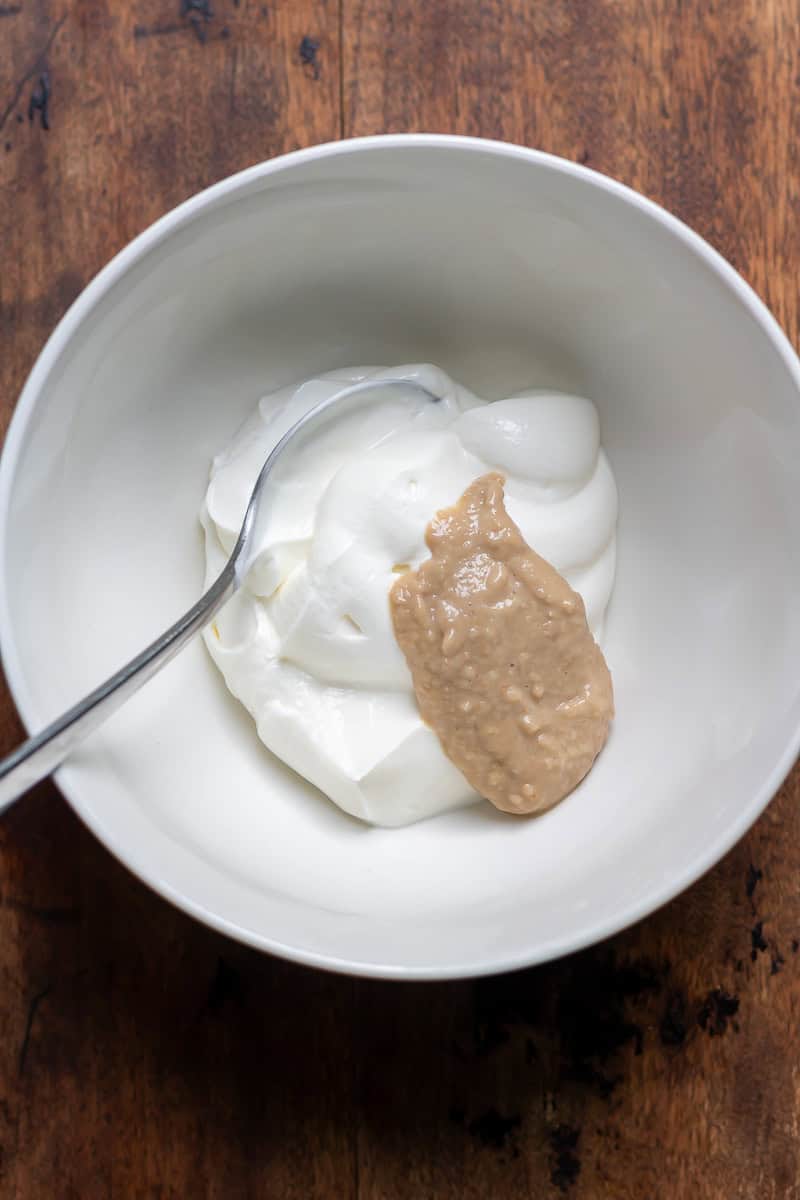
7. Make the horseradish sauce
While the tray finishes cooking, stir the horseradish into the Greek yoghurt.
Taste before adding more. Horseradish develops a noticeable nasal heat quite quickly, and I've found it's much easier to strengthen the sauce than rescue one that's too strong.
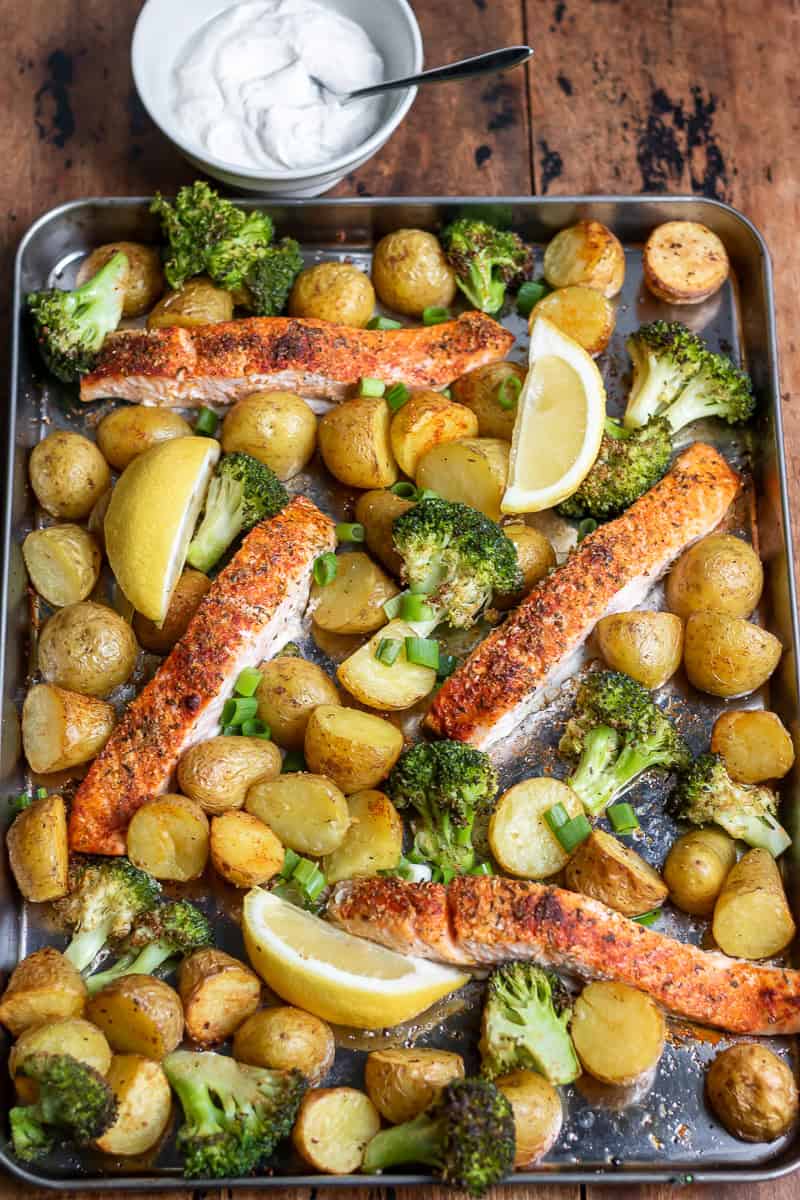
8. Serve with lemon
Let the salmon sit for a couple of minutes after leaving the oven, then serve with the potatoes, broccoli, horseradish yoghurt and lemon wedges.
I like squeezing the lemon over the fish immediately before eating rather than before roasting. The fresh acidity is much brighter that way.
Scroll down for the full ingredients list and method.
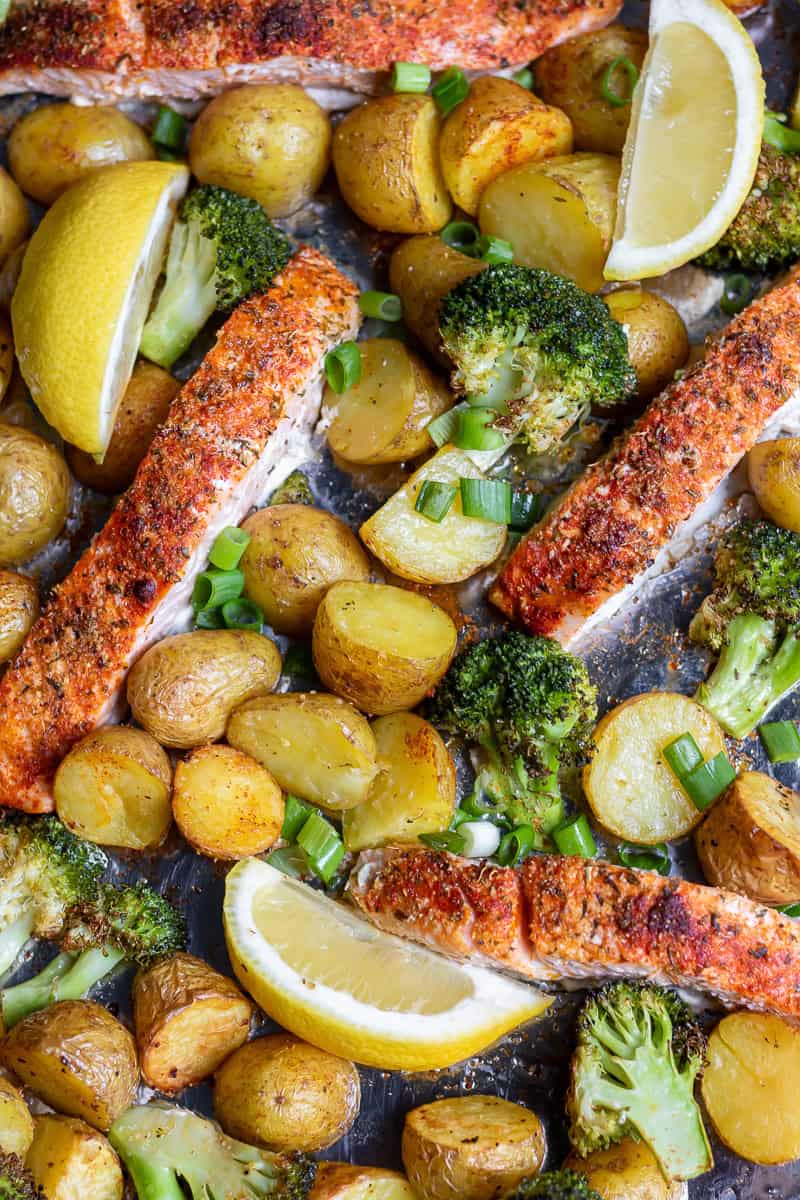
Variations
- Gluten-free version. The core ingredients are naturally gluten-free, but check prepared horseradish and seasonings if cooking for someone who needs strict avoidance.
- Higher-protein version. Add chickpeas to the tray when the broccoli goes in. They become lightly crisp while the salmon cooks.
- Asparagus version. Replace broccoli with thick asparagus spears, which need roughly the same short roasting period.
- Cauliflower version. Small cauliflower florets work well, although I add them to the potatoes a little earlier because they take longer than broccoli.
- Fresh herb version. Finish with dill, parsley or chives after roasting. Dill is especially good with the horseradish sauce.
- Mustard yoghurt sauce. Dijon or wholegrain mustard makes a milder alternative to horseradish.
- Seasonal vegetable version. Try courgettes and peppers in summer or Brussels sprouts and squash in cooler months, adjusting their roasting times as necessary.
More Salmon Recipes


Recipe Tips
- Cut the potatoes evenly. Similar-sized pieces finish together, which matters when the salmon has such a short cooking window.
- Don't crowd the baking tray. Trapped steam gives you softer potatoes and broccoli. Two trays are better than piling ingredients together.
- Watch the salmon rather than relying solely on the timer. Fillet thickness varies enormously, so visual and texture cues are more useful than an exact minute.
- Keep broccoli florets fairly substantial. Small crumbs and very thin pieces can burn at 425°F / 220°C.
- Season the sauce gradually. Prepared horseradish varies by brand, and some jars are substantially stronger than others.
- Use the hottest part of the tray wisely. If your oven browns more strongly at the back, I position the thicker salmon pieces there and thinner ones nearer the front.
- Don't worry if some potatoes stick slightly. Those stuck surfaces are often the brownest. A thin metal spatula usually releases them cleanly.
Storage, Freezing and Making Ahead
Store leftovers in an airtight container in the refrigerator and use within three days.
For meal prep, I prefer containers with separate compartments or simply keep the horseradish sauce in its own small tub. Otherwise, the sauce gets warm during reheating and the potatoes absorb moisture from it.
Reheat the potatoes and broccoli in a hot oven or air fryer if maintaining their roasted texture matters. Salmon can also be reheated gently, although I often prefer leftover salmon cold because reheating inevitably cooks it a little further.
Freezing is possible, but this isn't my first choice. Cooked salmon freezes reasonably well, while roasted potatoes and broccoli become softer after thawing. Greek yoghurt sauces can also separate.
If you do freeze leftovers, freeze the cooked salmon separately and make fresh sauce when serving.
For make-ahead preparation, cut the broccoli, mix the sauce and measure the seasonings earlier in the day. I leave cutting the potatoes until closer to cooking unless I'm storing them properly submerged in cold water.
To refresh refrigerated leftovers, add fresh lemon, another spoonful of yoghurt sauce and a handful of chopped herbs. Those fresh elements make a surprisingly big difference.
Be sure to subscribe to my free Newsletter and follow me on Facebook and Pinterest for more tasty recipes!
📖 Recipe
Sheet Pan Salmon, Potatoes and Broccoli
Equipment
- Bowl
- Sheet Pan
Ingredients
- 1 lb baby potatoes
- 3 tablespoons olive oil divided
- 2 teaspoons garlic powder divided
- ¼ teaspoon salt
- 1 head broccoli cut into florets
- 4 salmon fillets
- 1 teaspoon smoked paprika
- 1 teaspoon dried thyme
For Serving
- 1 lemon
For the Yogurt Horseradish Sauce
- 1 cup plain Greek yogurt
- 1 teaspoon horseradish or more to taste
Instructions
- Preheat the oven to 425°F/220°C.
- Cut the potatoes into halves or thirds so they're approximately the same size. Add them to a mixing bowl with 2 tablespoons of the oil, and 1 teaspoon of the garlic powder.
- Toss to coat, then spread out evenly onto a large baking sheet (or use two).
- Roast in the oven for 15 minutes.
- Stir the potatoes, then nestle the broccoli florets and salmon fillets (skin side down if they have skin on) amongst the partially-roasted potatoes. Use two baking sheets if necessary so the ingredients roast (they'll steam if too crowded).
- Sprinkle the salmon with the remaining teaspoon of garlic powder, the smoked paprika and dried thyme. Drizzle the salmon and broccoli with the remaining tablespoon of oil.
- Return the baking sheet(s) to the oven and roast for a further 10-15 minutes or until the salmon is cooked through and flakes easily.
- Meanwhile, make the yogurt horseradish sauce by stirring the horseradish into the yogurt. Taste and add more horseradish if you'd like it stronger (other alternative flavours you can add are chipotle paste, hot sauce, or rose harissa paste).
Notes
- Cut the potatoes evenly. Similar-sized pieces finish together, which matters when the salmon has such a short cooking window.
- Don't crowd the baking tray. Trapped steam gives you softer potatoes and broccoli. Two trays are better than piling ingredients together.
- Watch the salmon rather than relying solely on the timer. Fillet thickness varies enormously, so visual and texture cues are more useful than an exact minute.
- Keep broccoli florets fairly substantial. Small crumbs and very thin pieces can burn at 220°C.
- Season the sauce gradually. Prepared horseradish varies by brand, and some jars are substantially stronger than others.
- Use the hottest part of the tray wisely. If your oven browns more strongly at the back, I position the thicker salmon pieces there and thinner ones nearer the front.
- Don't worry if some potatoes stick slightly. Those stuck surfaces are often the brownest. A thin metal spatula usually releases them cleanly.
Nutrition
The nutritional information provided is approximate and can vary depending on several factors, so is not guaranteed to be accurate. Please see a registered dietician for special diet advice.

Comments
No Comments