
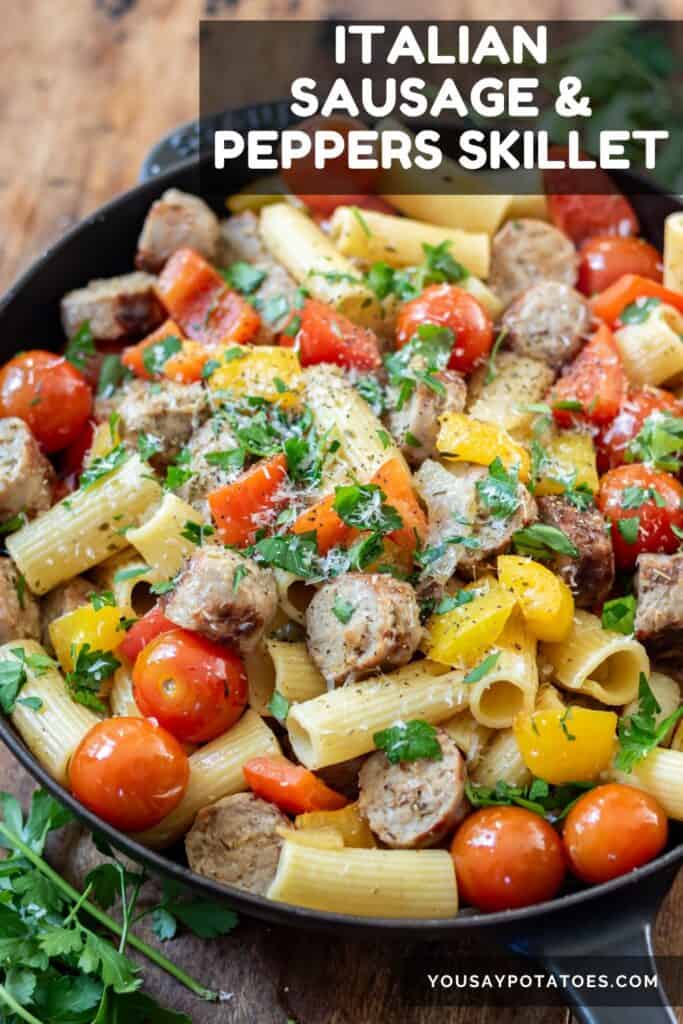
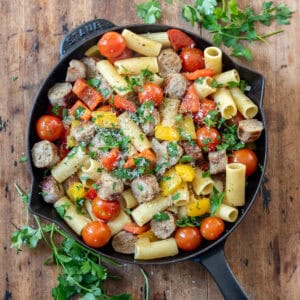
Italian Sausage and Peppers Skillet is a quick 30-minute one-pan pasta dinner packed with pork sausages, bell peppers, tomatoes and herbs.
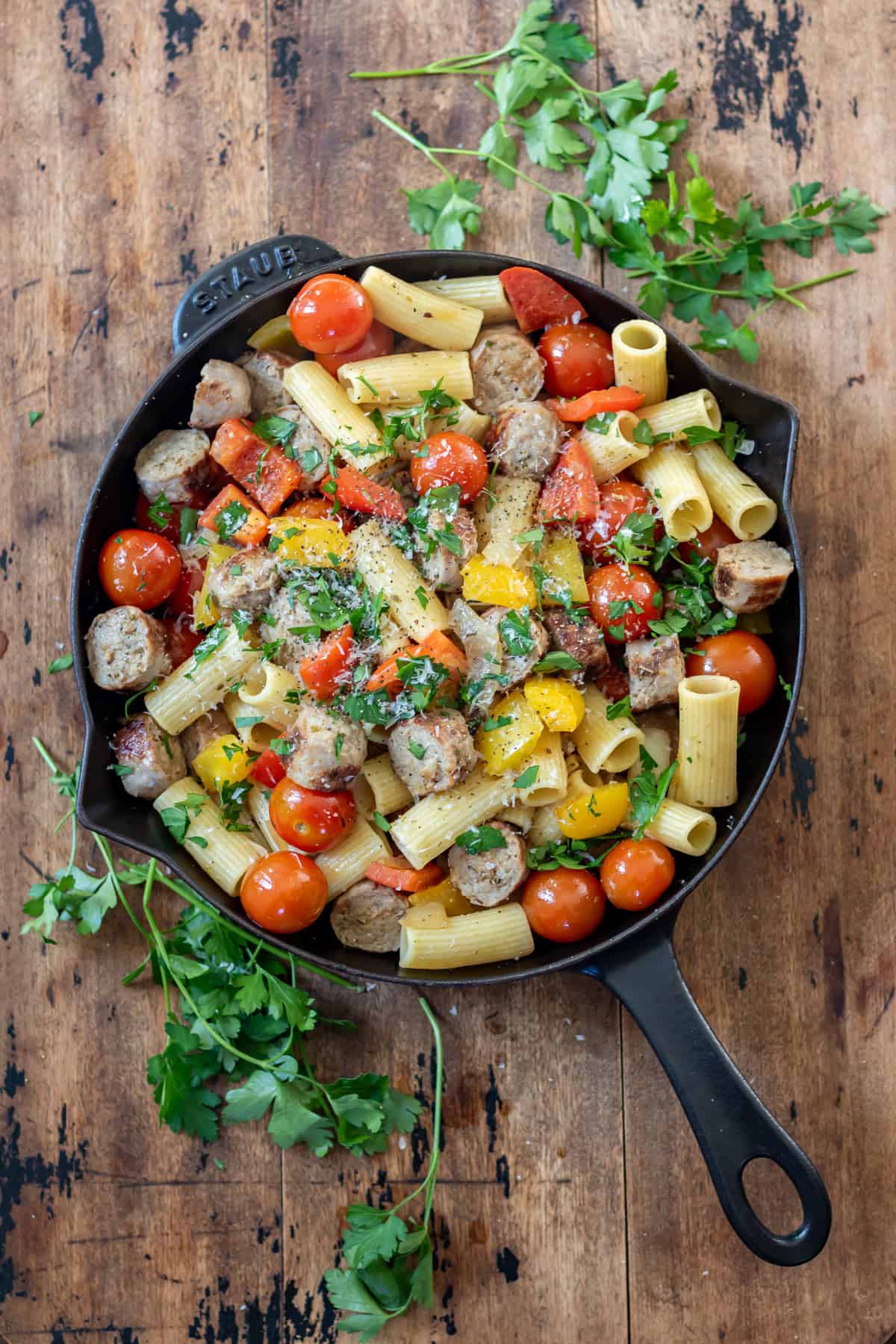
This Italian Sausage and Peppers Skillet is full of browned pork sausages, soft sweet peppers, onions, bursts of cherry tomato, and pasta coated in herbs and all the savory juices from the pan.
It tastes rich and satisfying without needing a long simmer or complicated sauce.
I especially like this kind of pasta recipe on evenings when I want something filling but still fresh tasting. And on hot evenings when we want a filling meal, but don't want to turn on the oven.
The peppers and tomatoes keep the dish from feeling heavy, while oregano and thyme bring that familiar Italian-inspired flavor that works so well with pork sausage.
Rigatoni catches all the juices in its ridges, but honestly, almost any pasta shape works here.
Serve it with a side salad and garlic bread for a full meal!
Jump to:
Why You'll Love This Recipe
- The sausage creates a rich, savory base without needing a long-cooked sauce.
- Bell peppers add sweetness and freshness that balance the richness of the pork.
- This recipe comes together in around 30 minutes, making it practical for weeknights.
- Pasta water helps create a glossy sauce without extra cream.
- Rigatoni holds onto the sausage and vegetables particularly well.
- Leftovers reheat nicely for lunches the next day.
- You can easily adjust the spice level depending on the sausage you choose.
- The ingredients are affordable and widely available.
- One skillet keeps cleanup manageable.
- The recipe works well with extra vegetables if you want to stretch it further.
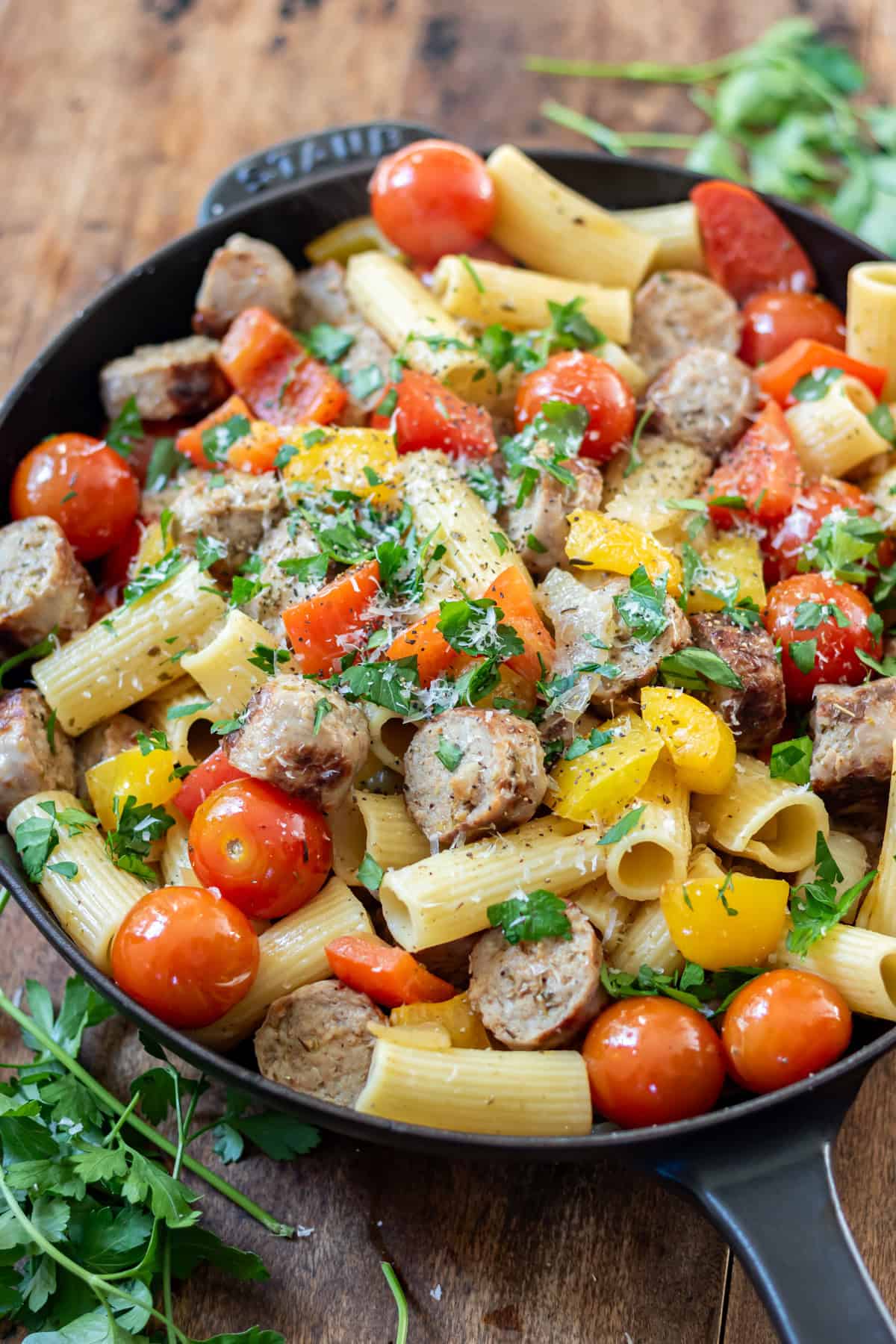
What Type of Sausage Should You Use for Italian Sausage and Peppers Pasta?
The sausage matters more than almost any other ingredient in this recipe because it forms the flavor base for the entire skillet.
As the sausage browns, it releases fat and seasoning into the pan, which coats the peppers, onions, tomatoes, and pasta.
A good sausage gives you built-in seasoning and richness without needing a complicated sauce.
Best Overall Choice: Italian Pork Sausage
Traditional Italian pork sausage is the best fit here because it has enough fat to stay juicy and enough seasoning to flavor the whole dish.
You generally have three options:
- Sweet Italian sausage.
- Mild Italian sausage.
- Hot Italian sausage.
Sweet and mild Italian sausage are very similar. Both usually contain fennel, garlic, black pepper, and Italian herbs. Hot Italian sausage includes chili flakes for extra heat.
Sweet Italian Sausage
Sweet Italian sausage gives the most balanced flavor in this pasta. It lets the peppers and tomatoes stay noticeable rather than overwhelming them with spice.
Use this if:
- You are cooking for children.
- You want a more classic Italian-American flavor.
- You plan to add your own chili flakes separately.
- You want the Parmesan and herbs to stand out more.
Hot Italian Sausage
Hot Italian sausage creates a deeper, spicier skillet with more contrast against the sweet peppers and onions.
Use this if:
- You like spicy pasta dishes.
- You want stronger flavor with minimal extra ingredients.
- You are serving the pasta with rich cheese or garlic bread.
- You enjoy Calabrian chili, arrabbiata sauce, or spicy rigatoni dishes.
If your sausage is particularly spicy, you may want to use red or yellow bell peppers because their sweetness balances the heat well.
Ingredients
You only need simple pantry ingredients for this recipe!
- Pork sausages. Italian-style pork sausage gives the best flavor. You can use sweet, mild, or spicy sausage depending on your preference.
- Bell peppers. Red, yellow, or orange peppers bring sweetness and color. Green peppers are more bitter but still work if that is what you have.
- Rigatoni pasta. Rigatoni is excellent here because the tubes catch bits of sausage and sauce. Penne, ziti, fusilli, or shells also work well.
- Onion. Onion adds sweetness and depth as it softens in the skillet. Yellow onions are ideal, though red onions can also work.
- Cherry tomatoes. Cherry tomatoes burst slightly during cooking and create light freshness in the sauce. Grape tomatoes are a good substitute.
- Dried oregano. Oregano gives the dish a classic Italian-American flavor profile.
- Dried thyme. Thyme adds earthy depth that works particularly well with pork sausage.
- Olive oil. A small amount helps the sausage brown evenly and prevents sticking. Use regular olive oil rather than expensive finishing oil.
- Salt. Salt sharpens the flavors throughout the dish. Taste before adding too much because sausage can already be salty.
- Black pepper. Freshly cracked black pepper adds warmth and subtle heat.
- Parmesan. Parmesan adds salty richness at serving time. Pecorino Romano also works well.
- Parsley. Fresh parsley brightens the finished dish and cuts through the richness.
See the recipe card for quantities and method.
How to make this recipe
Follow these step-by-step instructions, then scroll down for the full ingredients list and method.
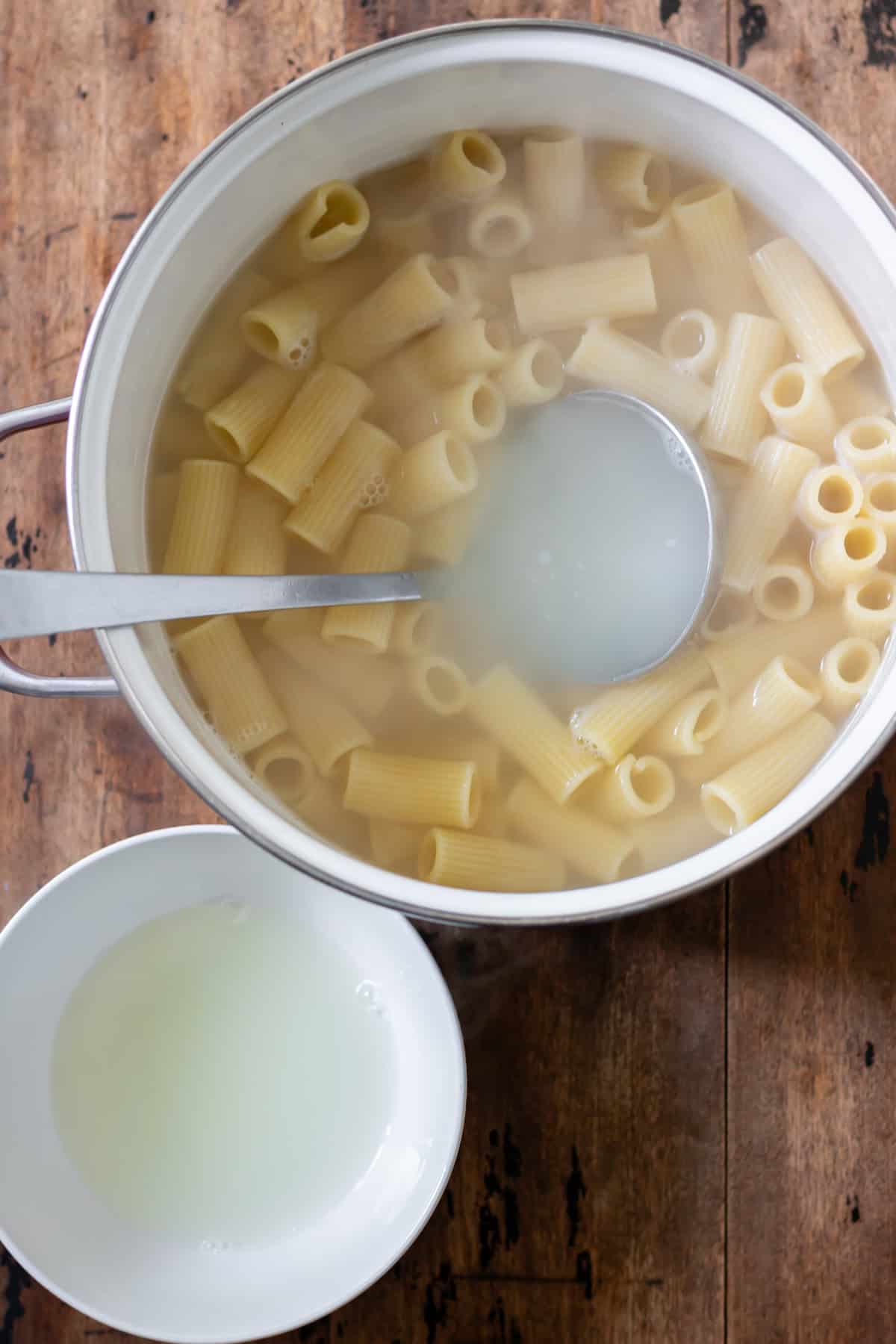
In large pot of boiling salted water, cook pasta according to package instructions for al dente. Drain pasta, reserving ½ cup cooking water.
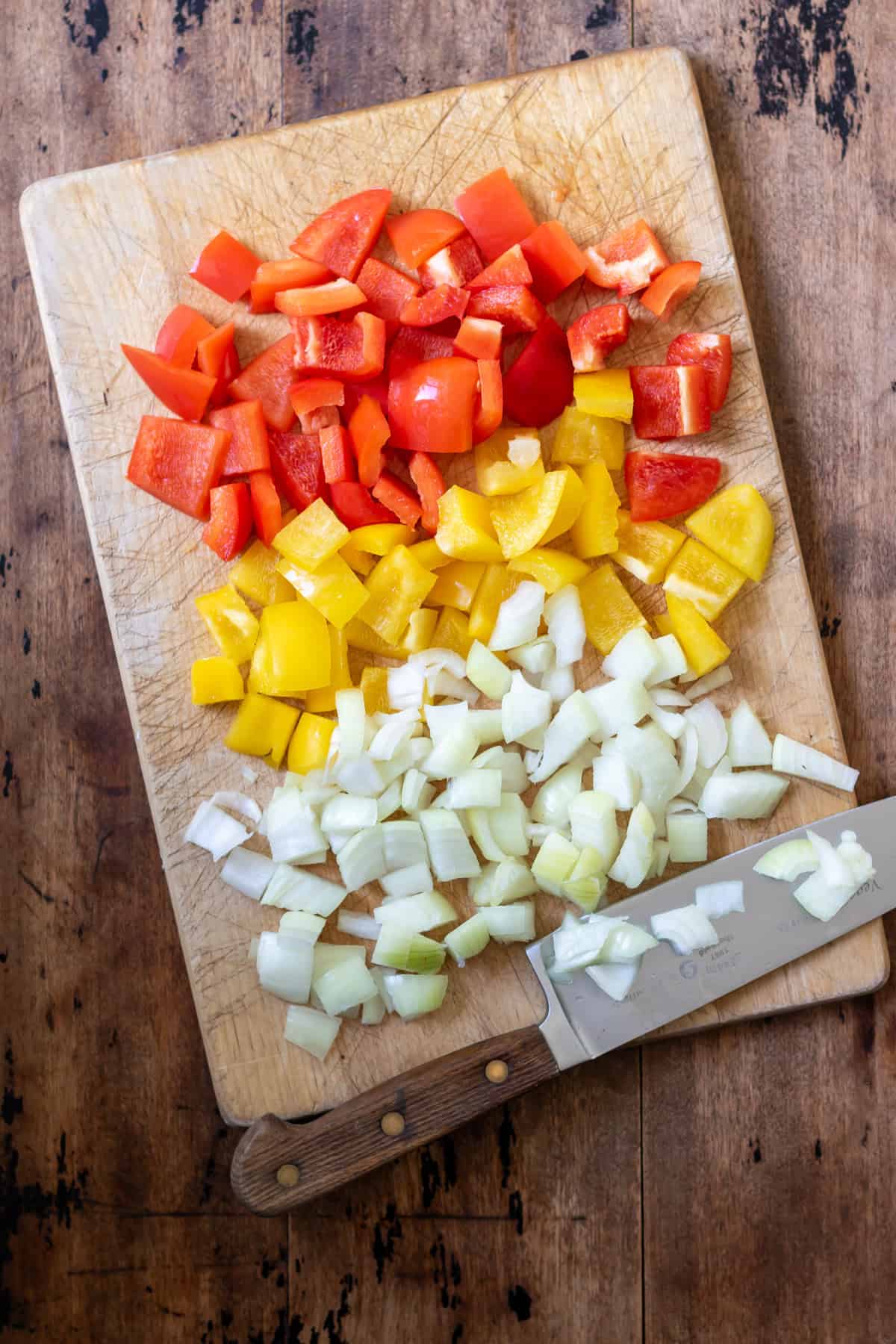
Meanwhile, chop the vegetables.
Place a large skillet over medium heat and add the oil.

Add the sausages and cook until browned all over.
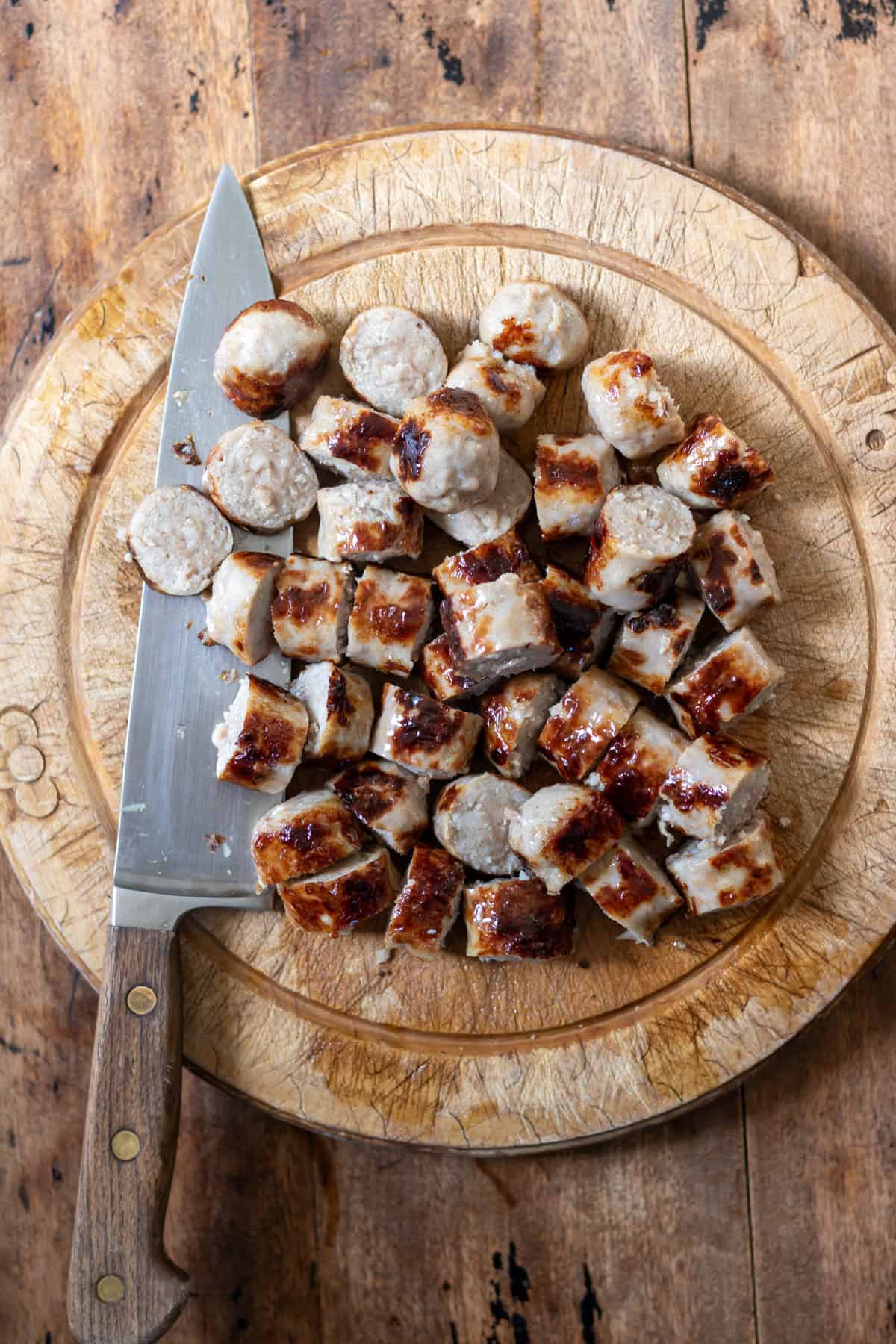
Remove from the pan and cut into slices.
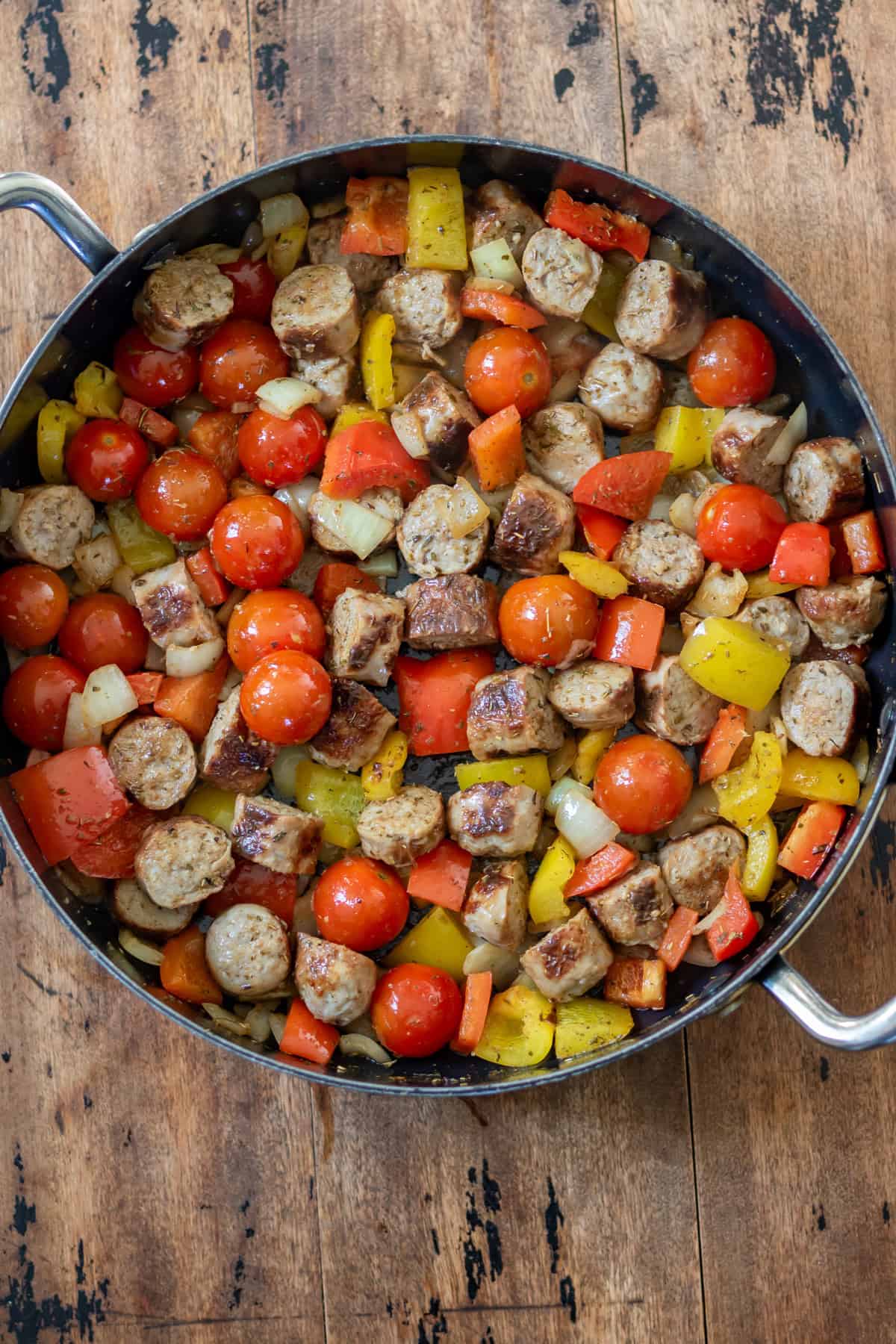
Return the sausages to the skillet along with the peppers, onions, garlic, tomatoes, oregano and thyme and cook for a further 5 minutes stirring often.
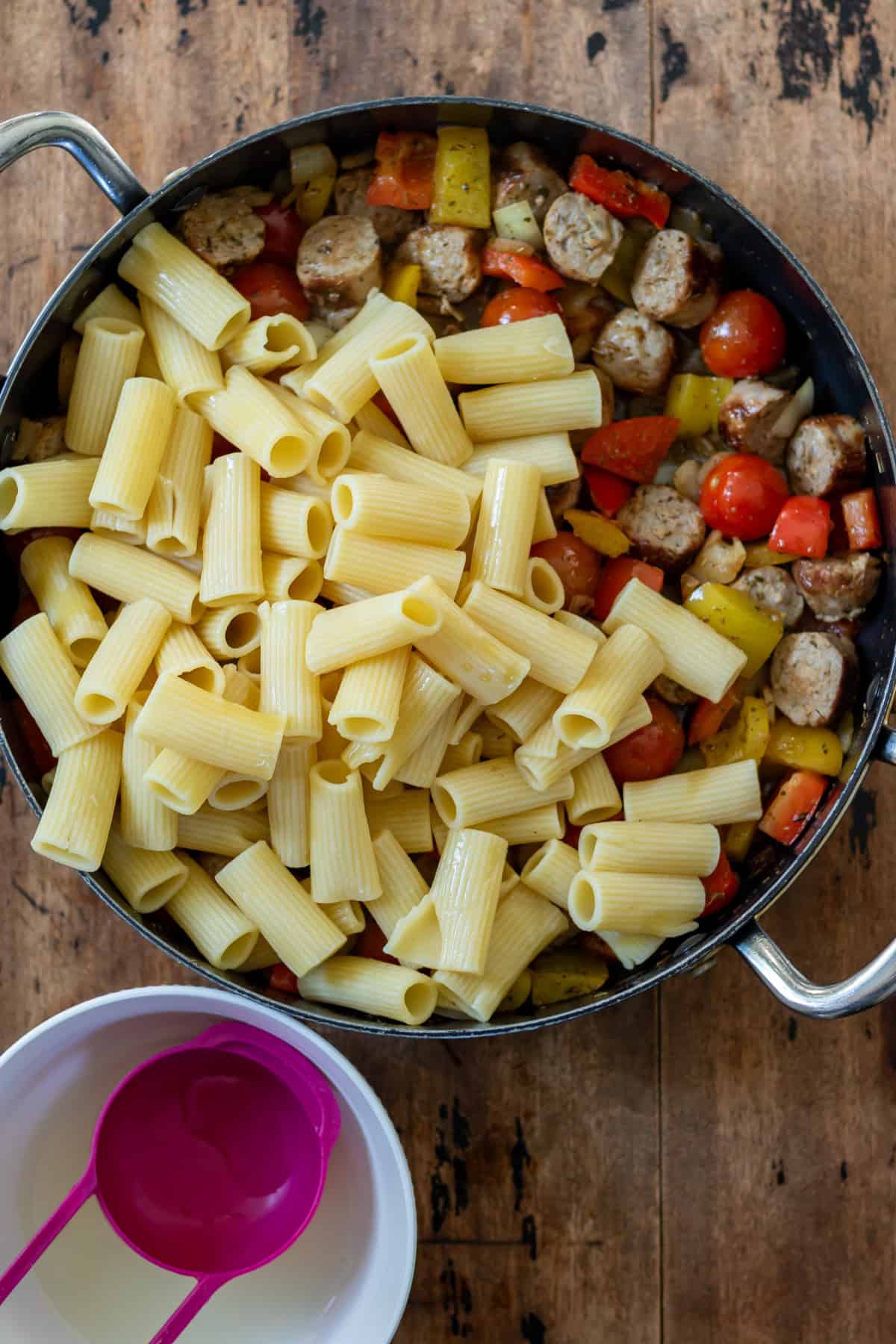
Add the cooked pasta to the skillet along with ½ cup of cooking water, and heat until it's all bubbling. Season with salt and pepper.
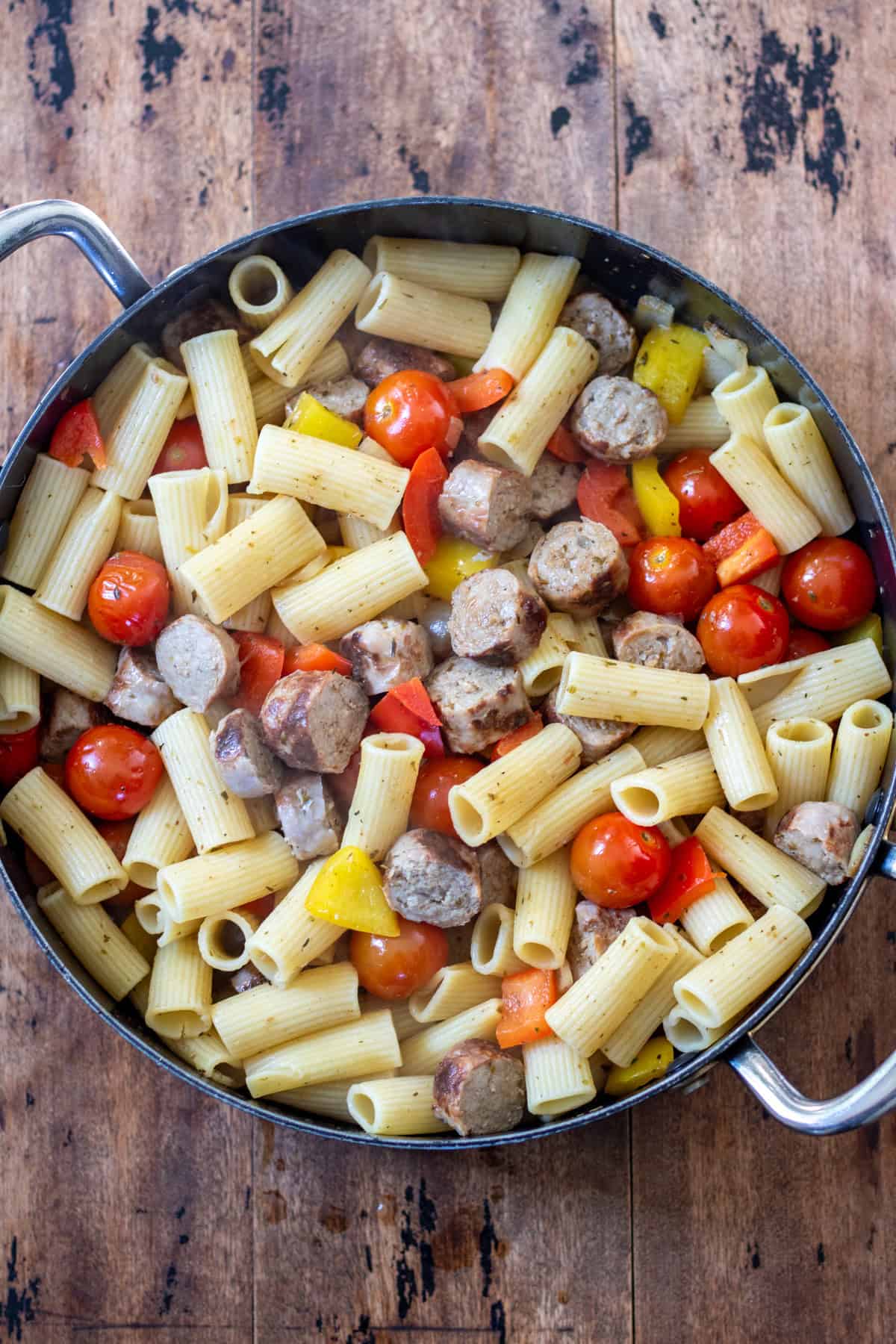
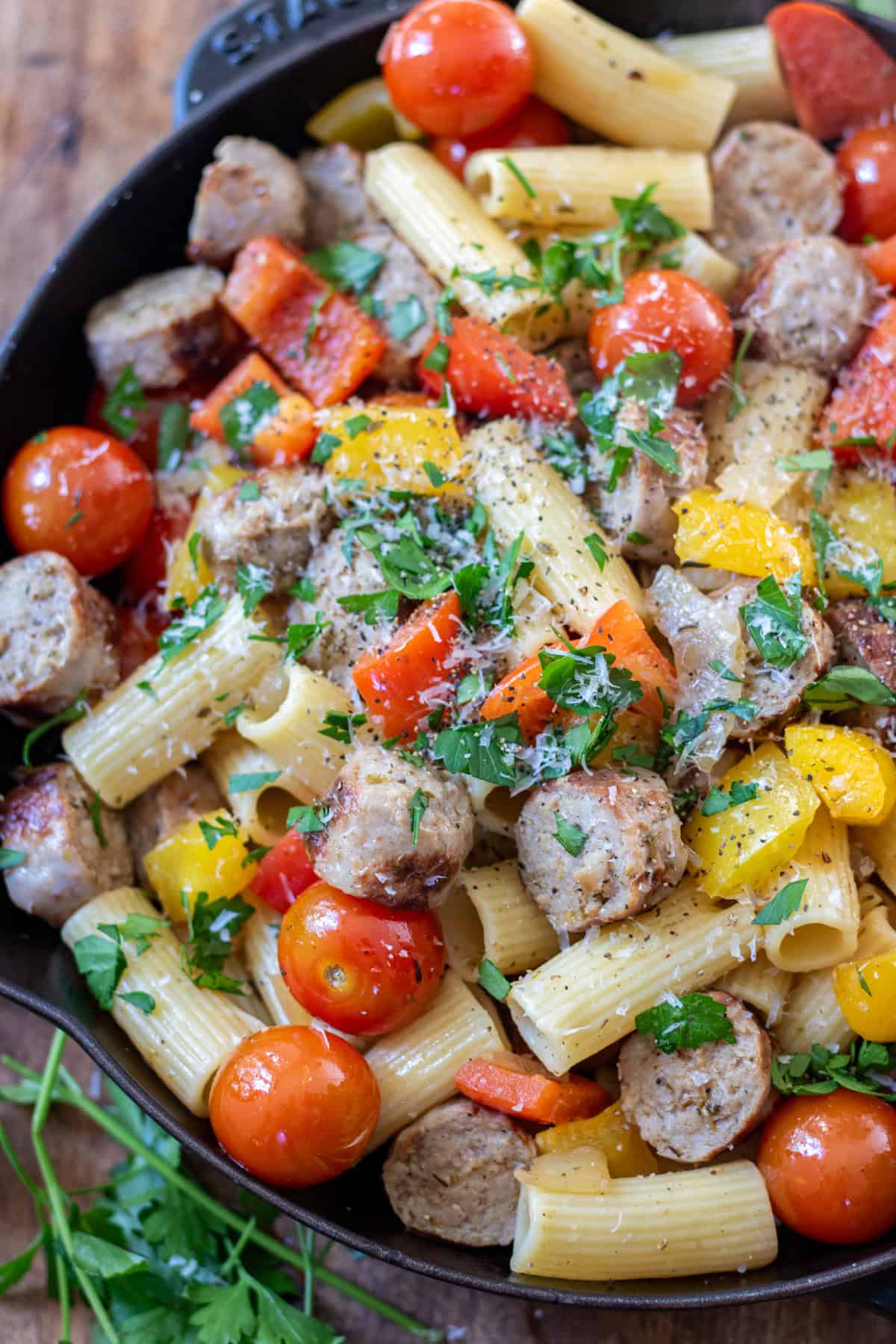
Serve sprinkled with the parmesan and parsley.
Scroll down for the full ingredients list and method.
Serving Suggestions
- Serve with garlic bread for a comforting dinner.
- Pair with a crisp green salad dressed with lemon vinaigrette.
- Add roasted broccoli on the side.
- Serve with Caesar salad.
- Spoon leftovers into a baking dish and top with cheese for baked pasta.
- Pair with sautéed green beans or Arkansas Green Beans with Bacon.
- Serve with focaccia bread.
- Add extra Parmesan and cracked pepper at the table.
- Pair with roasted asparagus.
- Serve alongside marinated olives and antipasti.
- Add burrata on top for a richer presentation.
- Serve with chili flakes for those who like extra heat.
Variations
- Use spicy Italian sausage for extra heat.
- Swap pork sausage for chicken sausage for a lighter version.
- Add spinach at the end until wilted.
- Stir in mushrooms with the onions for extra savoriness.
- Add crushed red pepper flakes for more spice.
- Use canned diced tomatoes if cherry tomatoes are unavailable.
- Add a splash of cream for a richer sauce.
- Include zucchini or eggplant for more vegetables.
- Use gluten-free pasta if needed.
- Add mozzarella on top and broil briefly for a baked pasta feel.
- Stir in white beans for extra protein and fiber.
- Use whole wheat pasta for a nuttier flavor.
- Add garlic for a stronger savory base.
- Try fennel bulb alongside the peppers for a sweeter flavor.
- Finish with basil instead of parsley.
More Pork Recipes



Storage, Freezing, Make-Ahead Advice
Storage - Store leftovers in an airtight container in the fridge for up to 4 days. The flavors often deepen slightly overnight.
Reheating - Reheat gently in a skillet with a splash of water or broth to loosen the sauce. Microwaving works too, but stovetop reheating keeps the pasta texture better.
Freezing - You can freeze this pasta, though the peppers soften more after thawing. Freeze in airtight containers for up to 2 months.
Make-Ahead Advice - You can chop the peppers and onions a day ahead and refrigerate them separately. Sausage can also be browned in advance and stored in the fridge until ready to use.
If making for meal prep, slightly undercook the pasta so it stays firmer after reheating.
Recipe Tips
- Brown the sausage properly before adding vegetables. Color equals flavor.
- Reserve more pasta water than you think you need. It helps loosen the sauce later.
- Cook the pasta just to al dente because it continues cooking in the skillet.
- Use a large skillet so the vegetables sauté instead of steaming.
- Slice the sausage evenly for more consistent cooking.
- If your tomatoes are not very sweet, add a tiny pinch of sugar.
- Taste before adding extra salt because Parmesan and sausage both contain salt.
- Fresh herbs at the end make a noticeable difference in flavor.
- If the skillet looks dry, add small splashes of pasta water gradually.
- Avoid overcrowding the pan or the sausage will not brown properly.
Other Flavor Add-Ins
- Crushed red pepper flakes
- Fresh basil
- Garlic
- Smoked paprika
- Baby spinach
- Kale
- Sun-dried tomatoes
- Roasted red peppers
- Black olives
- Capers
- Pecorino Romano
- Lemon zest
Be sure to subscribe to my free Newsletter and follow me on Facebook and Pinterest for more tasty recipes!
📖 Recipe
Italian Sausage and Peppers Skillet Pasta
Equipment
- Skillet
- Pot
Ingredients
- 12 ounces rigatoni or other pasta shape
- 1 tablespoon olive oil
- 8 pork sausages sliced
- 2 bell peppers chopped
- 1 onion chopped
- 2 cloves garlic crushed
- 1 cup cherry tomatoes
- 1 teaspoon dried oregano
- 1 teaspoon dried thyme
- Salt and pepper to taste
To serve:
- Parmesan
- Chopped parsley
Instructions
- In large pot of boiling salted water, cook pasta according to package instructions for al dente. Drain pasta, reserving ½ cup cooking water.
- Meanwhile, place a large skillet over medium heat and add the oil.
- Add the sausages and cook until browned all over. Remove from the pan and cut into slices.
- Return the sausages to the skillet along with the peppers, onions, garlic, tomatoes, oregano and thyme and cook for a further 5 minutes stirring often.
- Add the cooked pasta to the skillet along with ½ cup of cooking water, and heat until it's all bubbling. Season with salt and pepper.
- Serve sprinkled with the parmesan and parsley.
Notes
- Italian pork sausage works best because it already contains seasoning and fat that flavor the whole dish. Sweet sausage gives a milder result, while spicy sausage adds heat.
- Brown the sausage properly before adding vegetables. Color equals flavor.
- Reserve more pasta water than you think you need. It helps loosen the sauce later.
- Cook the pasta just to al dente because it continues cooking in the skillet.
- Use a large skillet so the vegetables sauté instead of steaming.
- Slice the sausage evenly for more consistent cooking.
- If your tomatoes are not very sweet, add a tiny pinch of sugar.
- Taste before adding extra salt because Parmesan and sausage both contain salt.
- Fresh herbs at the end make a noticeable difference in flavor.
- If the skillet looks dry, add small splashes of pasta water gradually.
- Avoid overcrowding the pan or the sausage will not brown properly.
Can I make this recipe without pork?
Yes. Chicken sausage or turkey sausage work well. Keep in mind that leaner sausages release less fat, so you may need slightly more olive oil.What pasta shape works best?
Rigatoni is excellent because the ridges hold onto sauce and bits of sausage. Penne, ziti, fusilli, and shells are also good choices.
Nutrition
The nutritional information provided is approximate and can vary depending on several factors, so is not guaranteed to be accurate. Please see a registered dietician for special diet advice.


Comments
No Comments